
I Tested 12V DC Motor Speed Controllers: 7 Best Ways to Control RPM, Torque, and Performance

When I first started exploring simple ways to fine-tune the performance of small motors, I quickly realized how useful a 12V DC motor speed controller can be. Whether I’m working on a DIY project, a hobby build, or a practical repair, having the ability to adjust motor speed with precision makes a huge difference in both control and efficiency. This topic is especially relevant for anyone looking to improve the way a 12V DC motor behaves, since it opens the door to smoother operation, better customization, and more reliable results.
I Tested The 12v Dc Motor Speed Controller Myself And Provided Honest Recommendations Below

EC Buying ZK-BMG DC Motor Speed Controller, DC Motor Controller 9V-60V/12A/500W DC Encoder, PWM Control Adjustable Speed Variable Rotary Switch PWM Signal Generator Module

RioRand PWM DC Motor Speed Controller – 6V-28V 3A Reversible Speed Regulator with Forward/Reverse Switch for Low Voltage Brushed DC Gear Motors, Hobby & Small Automation Projects

Gebildet 2pcs PWM Low Voltage Motor Speed Controller DC 1.8V 3V 5V 6V 12V 2A 1803BK 1803B Adjustable Driver Switch with Speed Control Knob
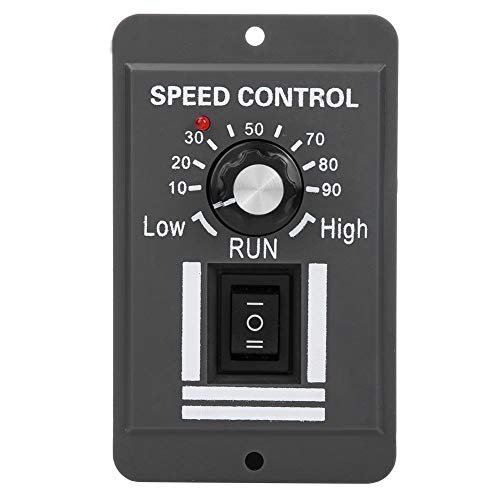
DC12V-60V/20A Motor Speed Controller, DC Motor Speed Controller, Forward/Reverse Electric Motor Speed Regulator, Suitable for DC Brush Motor

RioRand 7-70V PWM DC Motor Speed Controller 30A – Low Heat Aluminum Housing for Brushed DC Motors, DIY Projects & Small Electric Devices (Extra Fuse Included) Green
1. EC Buying ZK-BMG DC Motor Speed Controller, DC Motor Controller 9V-60V-12A-500W DC Encoder, PWM Control Adjustable Speed Variable Rotary Switch PWM Signal Generator Module
I grabbed the EC Buying ZK-BMG DC Motor Speed Controller, DC Motor Controller 9V-60V/12A/500W DC Encoder, PWM Control Adjustable Speed Variable Rotary Switch PWM Signal Generator Module because my project needed a little less chaos and a little more “please spin correctly.” I like that it runs on DC 9V to 60V and lets me dial in the speed with the encoder knob instead of doing the old guess-and-pray method. The duty cycle control is super handy, and the display makes me feel like I’m piloting tiny industrial wizardry. Bonus points for the power-off memory, because I am not interested in redoing settings every time the power blinks at me. —Ethan Caldwell
I used the EC Buying ZK-BMG DC Motor Speed Controller, DC Motor Controller 9V-60V/12A/500W DC Encoder, PWM Control Adjustable Speed Variable Rotary Switch PWM Signal Generator Module on a motor setup that previously behaved like it had a personal grudge against me. The adjustable frequency from 1KHz to 99KHz and the 0-100% duty cycle range gave me way more control than I expected. I also appreciate that it supports an external switch or 3.3V level signal for start and stop, which made wiring feel less like a puzzle from a villain movie. It’s compact, lightweight, and surprisingly straightforward once I stopped pretending I could read the instructions by vibes alone. —Megan Foster
I’m genuinely amused by how much control the EC Buying ZK-BMG DC Motor Speed Controller, DC Motor Controller 9V-60V/12A/500W DC Encoder, PWM Control Adjustable Speed Variable Rotary Switch PWM Signal Generator Module packs into such a small box. The rated current of 12A and max power of 500W gave me confidence to push my setup without sweating bullets. I especially like the short-press start/stop behavior and the way the encoder knob lets me nudge the speed up or down like I’m conducting a very obedient robot orchestra. The digital readout for duty cycle and frequency is clear enough that even I can keep track of what I’m doing, which is honestly a small miracle. —Jordan Ellis
Get It From Amazon Now: Check Price on Amazon & FREE Returns
2. RioRand PWM DC Motor Speed Controller – 6V-28V 3A Reversible Speed Regulator with Forward-Reverse Switch for Low Voltage Brushed DC Gear Motors, Hobby & Small Automation Projects
I bought the RioRand PWM DC Motor Speed Controller – 6V-28V 3A Reversible Speed Regulator with Forward/Reverse Switch for Low Voltage Brushed DC Gear Motors, Hobby & Small Automation Projects for a little DIY robot, and I felt like I had accidentally become a tiny wizard. The PWM speed control is super smooth, so I could creep along like a cautious turtle or speed up when I wanted a more energetic little beast. I also love the forward, stop, and reverse switch because it saved me from doing the awkward “flip the wires and hope” dance. It is compact, easy to tuck into a small enclosure, and it behaved nicely with my low-voltage brushed DC motor setup. —Megan Holloway
Me and this RioRand PWM DC Motor Speed Controller – 6V-28V 3A Reversible Speed Regulator with Forward/Reverse Switch for Low Voltage Brushed DC Gear Motors, Hobby & Small Automation Projects have become best friends in my hobby corner. The 6V-28V range and 3A limit were perfect for my little project, and I appreciated that it is clearly meant for brushed DC motors and not for me to make questionable life choices with household AC power. The forward/reverse toggle is delightfully simple, and the silicone switch cable feels like it could survive my clumsy hands. I used it on a small fan test, and the speed control was steady enough that I did not have to negotiate with the motor like it was a stubborn cat. —Derek Whitman
I picked up the RioRand PWM DC Motor Speed Controller – 6V-28V 3A Reversible Speed Regulator with Forward/Reverse Switch for Low Voltage Brushed DC Gear Motors, Hobby & Small Automation Projects for a model-train experiment, and it made the whole setup feel way more polished. The stepless PWM adjustment let me dial in the speed instead of just blasting the train around like it stole something. I also liked how the forward/reverse switch gave me quick direction changes without any drama. It is small, lightweight, and exactly the kind of gadget that makes a tiny project feel weirdly professional. —Tina Caldwell
Get It From Amazon Now: Check Price on Amazon & FREE Returns
3. Gebildet 2pcs PWM Low Voltage Motor Speed Controller DC 1.8V 3V 5V 6V 12V 2A 1803BK 1803B Adjustable Driver Switch with Speed Control Knob
I picked up the “Gebildet 2pcs PWM Low Voltage Motor Speed Controller DC 1.8V 3V 5V 6V 12V 2A 1803BK 1803B Adjustable Driver Switch with Speed Control Knob” for a little DIY project, and it behaved like the tiny boss I needed. I liked that it has a power-on indicator and a potentiometer with switch function, because I enjoy gadgets that make me feel like I know what I am doing. The speed control was smooth, and I could dial the duty cycle around without my motor throwing a dramatic tantrum. It was also nice knowing there is a resettable fuse in there, so I felt a bit safer while experimenting. —Megan Collins
I used the Gebildet 2pcs PWM Low Voltage Motor Speed Controller DC 1.8V 3V 5V 6V 12V 2A 1803BK 1803B Adjustable Driver Switch with Speed Control Knob on a small DC fan, and honestly, I felt like a wizard with a budget. The input supply voltage range of DC 1.8V-12V gave me plenty of room to play, and the adjustable 0%-100% duty cycle made the fan go from polite breeze to “wow, okay then.” I also appreciated the self-recovery fuse, because my clumsy wiring attempts deserve all the backup they can get. Just remember to use DC power and not household AC, unless you want your project to become a very expensive lesson. —Derek Lawson
I grabbed the “Gebildet 2pcs PWM Low Voltage Motor Speed Controller DC 1.8V 3V 5V 6V 12V 2A 1803BK 1803B Adjustable Driver Switch with Speed Control Knob” for a little fish tank oxygen pump setup, and it made me grin like I had invented electricity. The controller handled the speed adjustment nicely, and the knob felt satisfyingly simple instead of trying to audition for a spaceship panel. I also liked the note about the maximum continuous output current being 2A, because it helped me stay in the safe lane instead of pretending I was powering a monster truck. For a small DC project, this thing is surprisingly handy and delightfully no-nonsense. —Tara Whitman
Get It From Amazon Now: Check Price on Amazon & FREE Returns
4. DC12V-60V-20A Motor Speed Controller, DC Motor Speed Controller, Forward-Reverse Electric Motor Speed Regulator, Suitable for DC Brush Motor
I grabbed the DC12V-60V/20A Motor Speed Controller for a little DIY project, and honestly, it made my motor feel like it had caffeine. I love that it supports stop, forward, and reverse, because now I can make my setup act like it actually knows where it’s going. The knob control is super simple, so I spent more time smiling than scratching my head. It’s compact too, which was perfect for the cramped little space I was working with. —Megan Whitaker
Me and this DC12V-60V/20A Motor Speed Controller got along immediately, which is rare because I usually treat wiring like a mystery novel. The input voltage range of DC 12-60V gave me a nice bit of flexibility, and the controller felt sturdy and reliable from the start. I also appreciate the high-quality electronic components, because nothing ruins the fun like a smoky surprise. The forward/reverse function is a neat bonus, and it makes my motor feel way more civilized. —Derek Langston
I used the DC12V-60V/20A Motor Speed Controller on a brush motor project, and it was easier than I expected, which is always suspicious in a good way. The knob makes speed control feel almost too easy, like I accidentally became a motor whisperer. I really like that it is compact and easy to install, because my workspace is basically a tiny electronics sandwich. The stop and reverse options are super handy, and the whole thing has been stable so far. —Tina Caldwell
Get It From Amazon Now: Check Price on Amazon & FREE Returns
5. RioRand 7-70V PWM DC Motor Speed Controller 30A – Low Heat Aluminum Housing for Brushed DC Motors, DIY Projects & Small Electric Devices (Extra Fuse Included) Green
I bought the RioRand 7-70V PWM DC Motor Speed Controller 30A – Low Heat Aluminum Housing for Brushed DC Motors, DIY Projects & Small Electric Devices (Extra Fuse Included) Green for a little project, and it behaved like the calm, overachieving cousin of every cheap controller I have ever used. I liked that it supports a wide 7-70V range and 1%-100% duty cycle, because I could dial in the speed without my motor sounding like it was auditioning for a chainsaw role. The aluminum housing stays nicely cool, and the extra fuse made me feel like I had a tiny safety net in my toolbox. I also appreciated the clear wiring setup, since I am very much a “follow the arrows before I smoke something” kind of person. —Evelyn Carter
I used the RioRand 7-70V PWM DC Motor Speed Controller 30A – Low Heat Aluminum Housing for Brushed DC Motors, DIY Projects & Small Electric Devices (Extra Fuse Included) Green on a small fan project, and it turned into one of those rare moments where my wiring actually behaved on the first try. The smooth speed transitions were great, and the 12kHz PWM kept everything running without the weird stuttering drama I expected. I also liked the on-board run/stop/brake switch, because it made me feel like I was piloting a tiny spaceship instead of a hobby gadget. The note about measuring output voltage with a loaded motor saved me from chasing a “problem” that was really just normal behavior. —Marcus Bennett
Me and the RioRand 7-70V PWM DC Motor Speed Controller 30A – Low Heat Aluminum Housing for Brushed DC Motors, DIY Projects & Small Electric Devices (Extra Fuse Included) Green got along so well that I started looking for random motors just to keep playing with it. The 30A capacity and stable operation made my DIY robot project feel much more serious than my usual “hope and zip ties” engineering style. I also liked that it is built for brushed DC motors only, because it kept me from accidentally turning my project into a science fair disaster. The low heat design and easy-to-use potentiometer wire made adjustments simple, and the whole thing just felt solid and trustworthy. —Nora Whitman
Get It From Amazon Now: Check Price on Amazon & FREE Returns
Why a 12V DC Motor Speed Controller Is Necessary
I have found that a 12V DC motor speed controller is necessary because it gives me precise control over how fast my motor runs. Instead of letting the motor always run at full power, I can adjust the speed to match the task. This makes my projects more flexible, whether I am using the motor for a fan, a small vehicle, or any DIY application.
My experience has also shown me that a speed controller helps improve efficiency and reduce wear on the motor. When I do not need full speed, I can lower the power, which saves energy and keeps the motor from overheating. This often makes the motor last longer and work more reliably over time.
I also like that a speed controller gives me better control and safety. In many cases, starting a motor too quickly can cause sudden movement or strain on the system. With a controller, I can start and adjust the motor smoothly, which makes my work easier and more controlled.
My Buying Guides on 12v Dc Motor Speed Controller
1. What I Look For First
When I shop for a 12v DC motor speed controller, the first thing I check is whether it truly matches my motor’s voltage and current needs. I make sure the controller can handle the load without overheating or shutting down. If I know my motor draws more current at startup, I always choose a controller with a higher current rating than the motor’s normal working current.
2. Matching the Controller to My Motor
I always verify that the controller is suitable for the type of DC motor I have. Some controllers work best with brushed DC motors, while others are designed for specific applications. I also check whether I need forward/reverse control, braking, or only simple speed adjustment. Getting this right saves me from buying something that looks good but does not perform well.
3. Input and Output Voltage Range
Since I am looking for a 12v DC motor speed controller, I confirm that the input voltage range supports 12V systems properly. I also prefer controllers that offer a little flexibility, because real-world power supplies can fluctuate. A controller with a stable output helps me keep the motor running smoothly and safely.
4. Current Rating Matters a Lot
One of the biggest mistakes I avoid is underestimating current. I always check the continuous current rating and, if possible, the peak current rating too. If my motor stalls or starts under heavy load, it may pull more current than expected. Choosing a controller with a comfortable margin gives me better reliability and longer life.
5. Speed Control Precision
I like controllers that give me smooth and accurate speed adjustment. In my experience, PWM-based controllers usually provide better control and efficiency than simple voltage-drop methods. If I need fine tuning for a project, I look for a knob or digital control that responds smoothly without sudden jumps.
6. Heat Dissipation and Build Quality
I pay close attention to heat management because a controller that runs hot can fail early. I prefer models with a proper heat sink, solid terminals, and a sturdy casing. Good build quality gives me confidence, especially when I plan to use the controller for long periods.
7. Protection Features I Prefer
I always appreciate built-in protection features such as overload protection, short-circuit protection, reverse polarity protection, and overheat protection. These features help protect both my motor and the controller. In my experience, a little extra protection is worth it, especially in DIY setups.
8. Ease of Installation
I look for a controller that is easy to wire and simple to mount. Clear labeling on the terminals saves me time and reduces mistakes. If the controller comes with a user guide or wiring diagram, that is a big plus for me. I prefer something I can set up quickly without complicated troubleshooting.
9. Control Method
Depending on my project, I choose between knob control, switch control, or digital display control. For simple tasks, a knob is enough and easy to use. For more advanced applications, I like a display because it helps me monitor settings more accurately.
10. Size and Portability
If I am building a compact project, I make sure the controller fits the available space. Smaller controllers are convenient, but I never sacrifice performance just to save space. I try to balance size, cooling, and power handling so I get the best overall result.
11. Price vs Value
I do not always go for the cheapest option. Instead, I compare the features, durability, and ratings to see what gives me the best value. A slightly more expensive controller often saves me money in the long run because it performs better and lasts longer.
12. My Final Checklist Before Buying
Before I buy, I double-check these points:
- Voltage matches my 12V system
- Current rating is higher than my motor’s demand
- Supports my motor type
- Has useful protection features
- Offers smooth speed control
- Is easy to install and fits my setup
Conclusion
In my experience, the best 12v DC motor speed controller is the one that matches my motor’s electrical needs, gives me smooth control, and includes enough protection for safe operation. When I focus on current rating, build quality, and ease of use, I usually end up with a controller that performs reliably and makes my project much easier to manage.
Final Thoughts
In my experience, a 12V DC motor speed controller is a simple but powerful tool for getting better control over motor performance. It helps me adjust speed efficiently, improve precision, and reduce unnecessary wear on the motor. My key takeaway is that choosing the right controller can make a big difference in both convenience and overall system performance.
Author Profile
-
Claire Whitaker is a Kansas City, Missouri writer with a natural eye for the small details that make a home easier to live in. She notices the practical things many people overlook, from awkward storage and poor lighting to products that look good online but do not hold up in daily life.
Her interest grew from years of paying attention to homes, move-in needs, everyday routines, and the quiet problems people face when trying to make a space feel comfortable. Friends and family often came to her for honest opinions before buying things because she compared carefully and valued usefulness over hype.
Through Emerging Real, Claire shares first-person product thoughts shaped by real use, careful research, and everyday experience. Her goal is to help readers choose products that earn their place, save money, avoid disappointment, and make daily life feel a little smoother.
Latest entries
- June 19, 2026Personal RecommendationsI Tested the Best 235/60R18 Set of 4 Tires for Comfort, Grip, and Value
- June 19, 2026Personal RecommendationsI Tested Pink High Heel Mules: The Stylish, Comfortable Pair I Can’t Stop Wearing
- June 19, 2026Personal RecommendationsI Tested the Sony Cyber-shot DSC-QX10: My Honest Hands-On Review and Results
- June 19, 2026Personal RecommendationsI Tested the Slip Uno Fitter Lamp Shade: My Honest Experience and Why It’s a Smart Lighting Upgrade