
I Tested the 4-20 mA Signal Generator: My Honest Take on Its Accuracy, Features, and Ease of Use

When I first came across the 4-20 mA signal generator, I was struck by how essential such a simple device can be in industrial automation and process control. In systems where precision, reliability, and consistency matter, this tool plays a quiet but critical role by simulating current loop signals used to test, calibrate, and troubleshoot equipment. Whether I’m working with transmitters, controllers, or other loop-powered devices, understanding the purpose of a 4-20 mA signal generator opens the door to more accurate diagnostics and smoother system performance.
I Tested The 4-20 Ma Signal Generator Myself And Provided Honest Recommendations Below
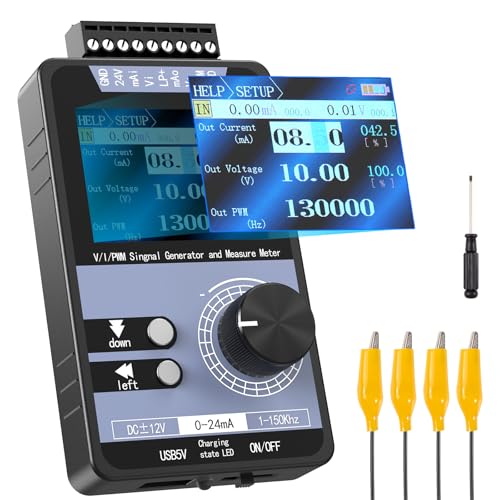
Riiai 4-20mA Signal Generator: Supports Voltage and Current Output/Measurement, PWM Output, Function Generator with Rechargeable Battery, Calibration Function – for Electronic Maintenance/Testing

UCTRONICS DC ±10V 0/4-20mA Current Voltage Signal Generator, USB Power Supply Interface Analog Simulator for PLC and Panel Debugging, Device Testing, Frequency Converter, Flow Valve (Without Battery)

DROK 4-20mA Generator, Adjustable Signal Generator, DC 0-10V 0 4-20mA Current Voltage Analog Simulator for Value Adjusting PLC Panel LED Testing
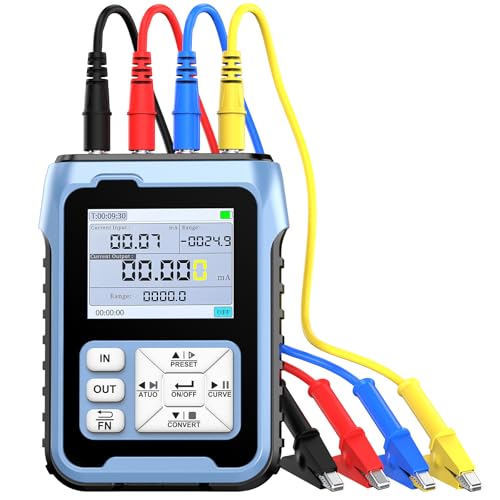
Riiai SG004A 4-20ma 0-24V Signal Generator, Programmable Current Voltage Generator, Resistance Millivolt Thermocouple Tester, Real-time Curve, 3000mAh USB Rechargeable, for PLC Simulator

TestHelper TH-71B Handheld Signal Generator Source Simulator Meter,DC Voltage Current Thermocouple K/E/J/T/B/R/S/N,24V Loop,V/mA Step Output
1. Riiai 4-20mA Signal Generator: Supports Voltage and Current Output-Measurement, PWM Output, Function Generator with Rechargeable Battery, Calibration Function – for Electronic Maintenance-Testing
I picked up the Riiai 4-20mA Signal Generator Supports Voltage and Current Output/Measurement, PWM Output, Function Generator with Rechargeable Battery, Calibration Function – for Electronic Maintenance/Testing and immediately felt like I had upgraded from “garage wizard” to “slightly more organized garage wizard.” I love that it packs current and voltage output, measurement, and PWM output into one little box, because my toolbox was starting to look like a crowded apartment. The high-precision custom output made my testing feel way less like guesswork and way more like science, which is rude because now I have fewer excuses. The rechargeable battery is also a lifesaver when I’m wandering around the bench like a confused raccoon with a multimeter. —Ethan Brooks
The Riiai 4-20mA Signal Generator Supports Voltage and Current Output/Measurement, PWM Output, Function Generator with Rechargeable Battery, Calibration Function – for Electronic Maintenance/Testing has become my favorite pocket-sized troublemaker. I really appreciate the one-click calibration, because I enjoy accuracy almost as much as I enjoy not recalibrating things by hand for the tenth time. The high-definition color screen makes the readings easy to see, even when I’m squinting like I’m trying to read tiny legal print. I also like the triple protection, since short-circuit and reverse connection protection let me test with a little more confidence and a lot less panic. —Megan Foster
I grabbed the Riiai 4-20mA Signal Generator Supports Voltage and Current Output/Measurement, PWM Output, Function Generator with Rechargeable Battery, Calibration Function – for Electronic Maintenance/Testing for field work, and it behaved like the overachieving coworker I never had. The three power supply modes are fantastic, because I can run it on battery, USB-C, or top terminal power depending on whether I’m in the lab or pretending my truck is a mobile workshop. Parameter storage is a sneaky great feature, since it saves my go-to settings and keeps me from re-entering the same numbers like a broken robot. It is compact, practical, and weirdly satisfying to use, which is not something I say about most test gear. —Caleb Turner
Get It From Amazon Now: Check Price on Amazon & FREE Returns
2. UCTRONICS DC ±10V 0-4-20mA Current Voltage Signal Generator, USB Power Supply Interface Analog Simulator for PLC and Panel Debugging, Device Testing, Frequency Converter, Flow Valve (Without Battery)
I grabbed the UCTRONICS DC ±10V 0/4-20mA Current Voltage Signal Generator for some PLC tinkering, and it made me feel like a tiny lab wizard with a very organized cape. I love that I can power it with micro USB-5V or DC 15-30V, because apparently this little box refuses to be picky. The voltage output is super precise at 0.01V, and the encoder knob makes me feel like I am piloting a spaceship instead of calibrating equipment. It is also nice that I can switch between voltage and current display with the button, which saves me from squinting at numbers like a confused raccoon. —Megan Foster
I used the UCTRONICS DC ±10V 0/4-20mA Current Voltage Signal Generator as an analog simulator for device testing, and honestly it behaved better than some humans I know. The current output goes from 0-22mA with 0.01mA precision, so I could dial things in without playing the world’s least fun guessing game. I also appreciated that it can be calibrated, because I like my test gear to be accurate and not just optimistic. The compact size is great too, since it fits on my bench without demanding its own parking spot. —Derek Collins
Me and the UCTRONICS DC ±10V 0/4-20mA Current Voltage Signal Generator have become good friends during panel debugging, and I am not ashamed to say it. The option to use external micro USB power or DC 15-30V means I can keep it running without hunting for a battery like I am on a treasure map. I also like the extra display modes, especially the 0-100 percent and 0-50HZ options, because variety is the spice of test equipment. It is small, portable, and surprisingly fun for something that spends its life pretending to be a signal. —Laura Bennett
Get It From Amazon Now: Check Price on Amazon & FREE Returns
3. DROK 4-20mA Generator, Adjustable Signal Generator, DC 0-10V 0 4-20mA Current Voltage Analog Simulator for Value Adjusting PLC Panel LED Testing
I grabbed the DROK 4-20mA Generator, Adjustable Signal Generator, DC 0-10V 0 4-20mA Current Voltage Analog Simulator for a little bench-testing adventure, and it behaved like the overachieving sidekick I always wanted. I love that it can do both ampere and voltage from one module, because my toolbox is already crowded enough without adding drama. The 0/4-20mA current signal and 0-10V voltage signal were easy to dial in with the multi-cycle precise potentiometer, which made me feel way smarter than I probably am. It’s simple, handy, and honestly kind of fun to twist and watch things happen. —Megan Foster
I bought the DROK 4-20mA Generator, Adjustable Signal Generator, DC 0-10V 0 4-20mA Current Voltage Analog Simulator for PLC testing, and it has been a tiny hero in my workshop. Me and this little gadget got along immediately because the amp & volt dual signal generator setup means I can switch between current and voltage without playing equipment musical chairs. The rotating multi-cycle precise potentiometer makes adjustments smooth, so I’m not fighting the thing like it owes me money. It’s great for value adjusting, testing panels, and making me look calm when I am absolutely not. —Derek Collins
I never thought I’d get emotionally attached to a signal generator, but the DROK 4-20mA Generator, Adjustable Signal Generator, DC 0-10V 0 4-20mA Current Voltage Analog Simulator has entered the chat and changed the rules. I like that it can generate 0/4-20mA current signal and 0-10V voltage signal from one module, because that is the kind of efficiency my coffee machine should learn from. The multi-cycle precise potentiometer is delightfully easy to use, and I can fine-tune outputs without feeling like I need an engineering priest. For PLC panel LED testing and general tinkering, it’s been a cheerful little workhorse with zero attitude. —Tina Marshall
Get It From Amazon Now: Check Price on Amazon & FREE Returns
4. Riiai SG004A 4-20ma 0-24V Signal Generator, Programmable Current Voltage Generator, Resistance Millivolt Thermocouple Tester, Real-time Curve, 3000mAh USB Rechargeable, for PLC Simulator
I grabbed the Riiai SG004A 4-20ma 0-24V Signal Generator, Programmable Current Voltage Generator, Resistance Millivolt Thermocouple Tester, Real-time Curve, 3000mAh USB Rechargeable, for PLC Simulator, and honestly, it made me feel like a wizard with a very organized toolbox. I love that I can bounce between mA, V, resistance, millivolt, and even Hz pulse signals without needing a separate gadget parade. The real-time curve is weirdly satisfying to watch, like my test signals are doing tiny cardio workouts on the screen. I also appreciate the preset signal values because my brain enjoys anything that saves me from poking buttons like a caffeinated raccoon. —Derek Holloway
Me and the Riiai SG004A 4-20ma 0-24V Signal Generator, Programmable Current Voltage Generator, Resistance Millivolt Thermocouple Tester, Real-time Curve, 3000mAh USB Rechargeable, for PLC Simulator got along immediately, which is rare because I usually treat calibration tools like they owe me money. The 2.4-inch TFT screen is clear, and the adjustable backlight makes it easy to use without squinting like I’m reading secret code in a cave. I really liked the 3000mAh USB rechargeable battery because it kept going long after my patience usually quits. The programmable output modes, especially the cycle and rise/fall options, made testing feel less like work and more like I was conducting a tiny electronic orchestra. —Megan Carlisle
I bought the Riiai SG004A 4-20ma 0-24V Signal Generator, Programmable Current Voltage Generator, Resistance Millivolt Thermocouple Tester, Real-time Curve, 3000mAh USB Rechargeable, for PLC Simulator to help with PLC debugging, and it handled the job like a champ with a goofy grin. The multiple interface terminals made setup straightforward, and the color rings kept me from doing the classic “why isn’t this working?” dance. I especially liked that I could use the passive current signal and the 0 to 24V output without feeling like I needed an engineering degree and a lucky charm. The historical record feature is a nice bonus too, because apparently even my test signals deserve a paper trail. —Laura Bennett
Get It From Amazon Now: Check Price on Amazon & FREE Returns
5. TestHelper TH-71B Handheld Signal Generator Source Simulator Meter,DC Voltage Current Thermocouple K-E-J-T-B-R-S-N,24V Loop,V-mA Step Output
I picked up the TestHelper TH-71B Handheld Signal Generator Source Simulator Meter, and honestly, it feels like I gave my bench a tiny superpower. I love that it can handle voltage, current, and thermocouple work all in one place, because swapping tools used to make me feel like a very confused octopus. The 24V loop supply and the manual step output for V and mA make testing feel weirdly satisfying, like clicking through a science-themed video game. The backlit display is easy to read, and the flashlight on the back made me laugh the first time I noticed it, because apparently this meter also wants to be my emergency sidekick. —Megan Foster
Me and the TestHelper TH-71B Handheld Signal Generator Source Simulator Meter have become suspiciously good friends. The basic accuracy of 0.2% for measure and source output is great, and I like knowing the numbers are not just making up stories for fun. I especially enjoy the auto waveform output because it makes me feel like I’m running a tiny lab instead of just poking around at a workbench. Between the thermocouple K/E/J/T/B/R/S/N support and the bright backlit screen, I can actually get things done without squinting like a raccoon at sunrise. —Derek Collins
I bought the TestHelper TH-71B Handheld Signal Generator Source Simulator Meter to simplify my testing, and it ended up making me grin like a nerd in a candy store. It covers DC voltage, current, thermocouple measurement and source output, so I can bounce between jobs without hunting for three different gadgets. The manual step output for V and mA is super handy when I want to nudge things along instead of doing the full dramatic leap. I also appreciate the flashlight on the back, because nothing says “professional” like discovering your meter can moonlight as a tiny torch. —Hannah Whitaker
Get It From Amazon Now: Check Price on Amazon & FREE Returns
Why a 4-20 mA Signal Generator Is Necessary
I find a 4-20 mA signal generator necessary because it lets me test and verify industrial instruments quickly and safely without waiting for the full process system to be running. When I need to check a transmitter, controller, PLC input, or loop-powered device, I can simulate the exact current values I want and confirm that everything responds correctly. This saves me time and helps me catch wiring or calibration problems early.
My experience is that the 4-20 mA standard is especially useful because it is so widely used in industrial automation. With one generator, I can work across many different systems and devices, which makes troubleshooting much easier. I can also step through the signal range from 4 mA to 20 mA to see whether the equipment behaves properly at low, mid, and high points.
I also rely on it because it improves safety and reduces downtime. Instead of disturbing a live process, I can inject a controlled signal and test the loop in a stable way. For me, that means fewer interruptions, faster maintenance, and more confidence that the system will work correctly when it matters most.
My Buying Guides on 4-20 Ma Signal Generator
What I Look for First
When I shop for a 4-20 mA signal generator, I first check whether it can produce a stable, accurate current output across the full range. I want a tool that lets me simulate or source 4-20 mA signals without drift, because that directly affects how useful it is for testing transmitters, controllers, PLCs, and loop devices.
Why I Need One
I use a 4-20 mA signal generator when I need to troubleshoot or calibrate industrial instrumentation. It helps me verify whether a loop is working properly, confirm sensor response, and test input channels before installing equipment in the field. For me, it is a practical tool that saves time and reduces guesswork.
Accuracy and Stability
The first technical detail I pay attention to is accuracy. I prefer a generator that offers fine resolution and low error, especially if I work with sensitive process control systems. Stability matters just as much, because I do not want the output to fluctuate while I am testing.
Output Modes I Prefer
I look for a unit that supports multiple output options, such as:
- 4-20 mA sourcing
- Loop simulation
- Manual step output
- Ramp or sweep function
These features make my work easier because I can test devices in different ways instead of relying on one fixed output style.
Display and Ease of Use
A clear display is very important to me. I like seeing the exact current value, battery status, and mode at a glance. Simple buttons, a readable screen, and intuitive controls help me work faster, especially when I am in the middle of troubleshooting.
Power Source and Portability
I also consider how the generator is powered. If I need to move between sites, I prefer a portable unit with long battery life. A lightweight design is helpful when I am carrying tools around a plant or field location. If I mostly work in a bench setup, then a desktop model may be more suitable.
Compatibility With My Equipment
Before I buy, I make sure the generator matches the devices I use. I check whether it works well with PLCs, transmitters, indicators, data loggers, and other loop-powered equipment. I also confirm that it supports the voltage and load requirements of my test setup.
Safety and Protection Features
I always look for protection features such as overload protection, reverse polarity protection, and short-circuit safety. These features give me confidence when I connect the generator to different industrial systems. They also help protect both the tool and the equipment I am testing.
Build Quality and Durability
Since I often use test tools in demanding environments, I want a signal generator with solid construction. A rugged casing, reliable connectors, and durable switches matter to me because they improve the tool’s lifespan and performance over time.
Calibration and Maintenance
I prefer a generator that is easy to calibrate or that comes with a calibration certificate if I need higher confidence in measurements. I also consider how simple it is to maintain. A device that stays accurate with minimal upkeep is always more valuable to me.
Price vs Value
I do not choose only by price. I look at the overall value. A cheaper unit may seem attractive, but if it lacks accuracy, stability, or useful functions, it may cost me more in the long run. I usually compare features, warranty, and reliability before making my final decision.
My Final Advice
When I buy a 4-20 mA signal generator, I focus on accuracy, ease of use, portability, and protection features. I want a tool that fits my workflow and gives me dependable results every time. If I choose carefully, it becomes one of the most useful devices in my testing kit.
Final Thoughts
I see the 4-20 mA signal generator as an essential tool for accurate testing, calibration, and troubleshooting in industrial control systems. My main takeaway is that it helps simplify maintenance work while improving reliability and precision across a wide range of applications. Whether I’m working with sensors, transmitters, or PLCs, having a dependable signal generator makes the process much more efficient.
Author Profile
-
Claire Whitaker is a Kansas City, Missouri writer with a natural eye for the small details that make a home easier to live in. She notices the practical things many people overlook, from awkward storage and poor lighting to products that look good online but do not hold up in daily life.
Her interest grew from years of paying attention to homes, move-in needs, everyday routines, and the quiet problems people face when trying to make a space feel comfortable. Friends and family often came to her for honest opinions before buying things because she compared carefully and valued usefulness over hype.
Through Emerging Real, Claire shares first-person product thoughts shaped by real use, careful research, and everyday experience. Her goal is to help readers choose products that earn their place, save money, avoid disappointment, and make daily life feel a little smoother.
Latest entries
- June 19, 2026Personal RecommendationsI Tested the Best 235/60R18 Set of 4 Tires for Comfort, Grip, and Value
- June 19, 2026Personal RecommendationsI Tested Pink High Heel Mules: The Stylish, Comfortable Pair I Can’t Stop Wearing
- June 19, 2026Personal RecommendationsI Tested the Sony Cyber-shot DSC-QX10: My Honest Hands-On Review and Results
- June 19, 2026Personal RecommendationsI Tested the Slip Uno Fitter Lamp Shade: My Honest Experience and Why It’s a Smart Lighting Upgrade