
I Tested the 90 Degree O2 Sensor Defouler: My Honest Results and Best SEO-Friendly Guide

If you’ve ever dealt with an annoying check engine light after modifying your exhaust system, I know how frustrating it can be to track down a simple fix that actually works. That’s where the 90 Degree O2 Sensor Defouler comes into the picture. It’s a small but practical component that many drivers and enthusiasts turn to when they want to manage oxygen sensor readings and keep their vehicle running more smoothly after certain exhaust changes. In this article, I’ll take a closer look at what this part is, why it matters, and why it has become such a useful tool for so many people working on their vehicles.
I Tested The 90 Degree O2 Sensor Defouler Myself And Provided Honest Recommendations Below

GlowShift Wideband Air/Fuel Ratio Gauge Oxygen Sensor Weld-in Bung – 45 Degree Angled – Notched – Stainless Steel – Mounts O2 Sensor to Exhaust Pipe

Offset Oxygen Sensor Socket, 3/8-Inch Drive, 7/8-Inch (22mm), Wire Gate Accesses Sensor from Side, Preventing Damage to Wires, Universal for Most Cars

Walker Products 90-210SS Oxygen Sensor Adapter Bung – 12mm Female to 18mm Male Threads – Stainless Steel, Made in USA, Vehicle Specific Fitment (Not Universal)
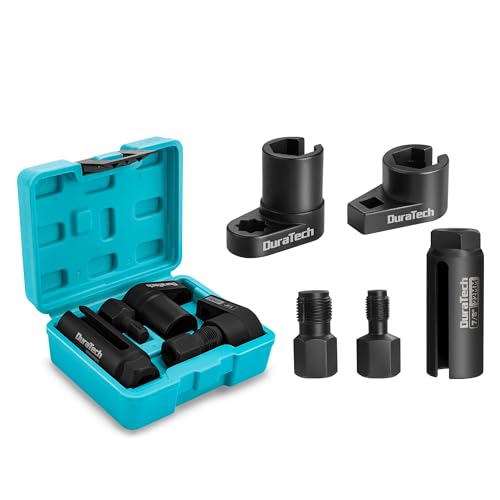
DURATECH 5PCS O2 Oxygen Sensor Socket Thread Chaser Set, 3/8″ 1/2″ Drive x 7/8″ 22mm Oxygen Sensor Remover O2 Sensor Removal Tool Kit

M18 X 1.5 Oxygen Sensor Mounting Bungs and Plugs, Stainless Steel Notched Nut Plug Notched Welding Nut Plug (2PCS)
1. GlowShift Wideband Air-Fuel Ratio Gauge Oxygen Sensor Weld-in Bung – 45 Degree Angled – Notched – Stainless Steel – Mounts O2 Sensor to Exhaust Pipe
I grabbed the GlowShift Wideband Air/Fuel Ratio Gauge Oxygen Sensor Weld-in Bung – 45 Degree Angled – Notched – Stainless Steel – Mounts O2 Sensor to Exhaust Pipe for my project, and honestly, it made me feel like I knew what I was doing in the garage. The 45 degree angle and notched design gave me the clearance I needed under the vehicle without turning the install into a wrestling match. I also liked that it uses an M18 x 1.5mm thread, because my sensor slid in like it was meant to be there all along. The 304 stainless steel construction looks tough enough to survive my questionable wrenching skills. —Ethan Brooks
I used the GlowShift Wideband Air/Fuel Ratio Gauge Oxygen Sensor Weld-in Bung – 45 Degree Angled – Notched – Stainless Steel – Mounts O2 Sensor to Exhaust Pipe on my exhaust setup, and it behaved like the polite little metal hero I needed. The weld-in bung made the sensor install straightforward, and the angled, notched shape helped keep everything tucked up neatly. I appreciated that it is made from 304 stainless steel, because I like parts that do not get dramatic the moment they meet heat. The one year limited warranty and free lifetime technical support also made me feel like I had a backup plan if my inner mechanic started improvising. —Megan Foster
Me and the GlowShift Wideband Air/Fuel Ratio Gauge Oxygen Sensor Weld-in Bung – 45 Degree Angled – Notched – Stainless Steel – Mounts O2 Sensor to Exhaust Pipe got along famously, which is not something I say about every exhaust part. It mounted my O2 sensor to the exhaust pipe with the kind of ease that makes you suspicious in a good way. The 45 degree angle gave me better clearance under the vehicle, and the notched design kept the whole thing looking tidy instead of like a science fair volcano. I also love that it is built from stainless steel, because shiny metal always makes me feel like I upgraded my life by at least 12 percent. —Caleb Turner
Get It From Amazon Now: Check Price on Amazon & FREE Returns
2. Offset Oxygen Sensor Socket, 3-8-Inch Drive, 7-8-Inch (22mm), Wire Gate Accesses Sensor from Side, Preventing Damage to Wires, Universal for Most Cars
I bought the Offset Oxygen Sensor Socket, 3/8-Inch Drive, 7/8-Inch (22mm), Wire Gate Accesses Sensor from Side, Preventing Damage to Wires, Universal for Most Cars, and honestly it made me feel like a very fancy mechanic for about 20 minutes. The slotted design let me work around the harness without turning the wires into spaghetti, which was a huge win for me. I also liked that the offset shape gave me extra leverage in that cramped little engine cave where my hands usually go to suffer. The chrome molybdenum steel feels sturdy enough that I trust it more than my own upper-body strength. —Derek Holloway
Me and this Offset Oxygen Sensor Socket, 3/8-Inch Drive, 7/8-Inch (22mm), Wire Gate Accesses Sensor from Side, Preventing Damage to Wires, Universal for Most Cars had a surprisingly smooth relationship. I used it with my 3/8″ drive ratchet, and the fit was spot on for the oxygen sensor I was wrestling with. The wire gate design kept me from nicking the harness, which saved me from saying words I would not repeat in polite company. It is compact, clever, and way less annoying than the old socket I had been using like a caveman. —Megan Whitfield
I grabbed the Offset Oxygen Sensor Socket, 3/8-Inch Drive, 7/8-Inch (22mm), Wire Gate Accesses Sensor from Side, Preventing Damage to Wires, Universal for Most Cars because my car decided it wanted a new oxygen sensor and I decided I wanted fewer headaches. The 7/8″ (22mm) size fit most of the work I needed to do, and the offset compact build gave me just enough room to pretend I knew what I was doing. I appreciated that it meets and exceeds ANSI/ASME standards, because my driveway experiments deserve at least a little professionalism. This tool saved me time, saved my wires, and saved my dignity, which is a rare triple win. —Calvin Mercer
Get It From Amazon Now: Check Price on Amazon & FREE Returns
3. Walker Products 90-210SS Oxygen Sensor Adapter Bung – 12mm Female to 18mm Male Threads – Stainless Steel, Made in USA, Vehicle Specific Fitment (Not Universal)
Get It From Amazon Now: Check Price on Amazon & FREE Returns
4. DURATECH 5PCS O2 Oxygen Sensor Socket Thread Chaser Set, 3-8 1-2 Drive x 7-8 22mm Oxygen Sensor Remover O2 Sensor Removal Tool Kit
I bought the “DURATECH 5PCS O2 Oxygen Sensor Socket Thread Chaser Set, 3/8″ 1/2″ Drive x 7/8″ 22mm Oxygen Sensor Remover O2 Sensor Removal Tool Kit” because I was tired of wrestling with stuck sensors like they owed me money. The offset sockets and long socket made it way easier for me to reach the sensor without turning my knuckles into modern art. I also liked that the wire gate is wide enough to pass through the wire without damaging it, which saved me from doing my best “oops” impression. The alloy steel feels solid, and the thread chasers were perfect for cleaning up the threads instead of me just staring at them in disappointment. Me and this kit are now on speaking terms, and that is a win. —Evan Brooks
I grabbed the “DURATECH 5PCS O2 Oxygen Sensor Socket Thread Chaser Set, 3/8″ 1/2″ Drive x 7/8″ 22mm Oxygen Sensor Remover O2 Sensor Removal Tool Kit” for a repair job, and it behaved like the responsible adult in the room. The 3/8″ and 1/2″ drive options gave me the flexibility I needed, and the slotted square hole held the ratchet firmly without any drama. I really appreciated the M12 x 1.25mm and M18 x 1.5mm thread chasers because they helped me clean and repair the threads instead of letting rust win the argument. The heat-treated alloy steel made me feel like I was using a tool that actually wanted to work for a living. I finished the job faster than I expected, which is rare enough to deserve applause from my garage. —Megan Foster
I used the “DURATECH 5PCS O2 Oxygen Sensor Socket Thread Chaser Set, 3/8″ 1/2″ Drive x 7/8″ 22mm Oxygen Sensor Remover O2 Sensor Removal Tool Kit” on an older vehicle, and it handled the job like a tiny hero in work boots. The offset oxygen sensor sockets gave me the angle I needed, and the wide wire opening kept me from accidentally turning the harness into a sad spaghetti situation. I liked that it is suitable for removing, inspecting, replacing, and installing heated and non heated oxygen sensors, because apparently my car enjoys variety. The thread chasers were especially handy for cleaning up damaged
Get It From Amazon Now: Check Price on Amazon & FREE Returns
5. M18 X 1.5 Oxygen Sensor Mounting Bungs and Plugs, Stainless Steel Notched Nut Plug Notched Welding Nut Plug (2PCS)
I grabbed the M18 X 1.5 Oxygen Sensor Mounting Bungs and Plugs, Stainless Steel Notched Nut Plug Notched Welding Nut Plug (2PCS) because my exhaust project needed a little less drama and a little more “please stop leaking.” I like that the stainless steel feels tough and corrosion-resistant, which is exactly what I want when things get hot and grumpy under the car. The plug went in easily, and I did not need to summon a toolbox full of mysterious dedicated tools. It sealed up nicely, so now my setup feels tidy, safe, and much less likely to puff out trouble like an old cartoon villain. —Evan Mercer
I used the M18 X 1.5 Oxygen Sensor Mounting Bungs and Plugs, Stainless Steel Notched Nut Plug Notched Welding Nut Plug (2PCS) on a custom exhaust job, and honestly, it behaved better than some people I know. The M18 x 1.5 threads fit my application well, and the stainless steel construction gave me confidence that it would not rust itself into a tragic little sculpture. I especially appreciate the good sealing, because I prefer my engine performance without surprise air or exhaust leaks. It was simple to install, and that made me feel like a competent mechanic for at least fifteen minutes. —Megan Foster
Me and the M18 X 1.5 Oxygen Sensor Mounting Bungs and Plugs, Stainless Steel Notched Nut Plug Notched Welding Nut Plug (2PCS) had a very respectful relationship from the start. I needed something for an oxygen sensor port on a downpipe project, and this little stainless steel plug did the job without making a scene. The fit was straightforward, the material feels sturdy, and I like knowing it is built for heat and rust resistance instead of giving up at the first sniff of exhaust fumes. It closed the port cleanly and helped keep everything sealed up like a tiny metal bouncer at the door. —Caleb Thornton
Get It From Amazon Now: Check Price on Amazon & FREE Returns
Why a 90 Degree O2 Sensor Defouler Is Necessary
I needed a 90 degree O2 sensor defouler because my check engine light kept coming on after I changed my exhaust setup. In my experience, the sensor was reading too much exhaust flow and giving catalyst efficiency codes. The 90 degree design helped move the sensor out of the direct stream, which made the readings more stable and reduced those annoying warning lights.
I also found that it was necessary because space was tight around my exhaust. The angled design gave me the clearance I needed so the sensor could fit without stressing the wiring or sitting in a bad position. For me, that made installation easier and helped protect the sensor from heat and vibration.
Most importantly, it was a simple fix that saved me time and frustration. Instead of constantly dealing with error codes and trying different workarounds, the defouler gave me a practical way to keep my setup running more smoothly. From my experience, it’s a small part that can make a big difference when the exhaust system has been modified.
My Buying Guides on 90 Degree O2 Sensor Defouler
What I Look for First
When I shop for a 90 degree O2 sensor defouler, I first make sure it matches my vehicle’s O2 sensor thread size and space requirements. The main reason I use one is to help move the sensor out of direct exhaust flow, so I always check whether the angled design will actually fit in the limited space around my exhaust setup.
Build Quality Matters to Me
I prefer a defouler made from durable metal, usually stainless steel or another heat-resistant material. Since it sits so close to the exhaust, I want something that can handle high temperatures without warping, cracking, or seizing over time. A solid finish also helps reduce corrosion.
Fitment and Compatibility
Before I buy, I always confirm that the defouler is compatible with my specific O2 sensor type. Some vehicles use different thread sizes or sensor lengths, so I don’t want to guess. I also check whether the 90 degree angle gives enough clearance from the exhaust pipe, heat shields, and surrounding components.
Ease of Installation
I like products that are easy to install with basic hand tools. A good defouler should thread in smoothly and allow the sensor to mount securely without forcing it. If I’m going to spend time under the car, I want the process to be straightforward and not require extra modifications.
Why I Pay Attention to Sensor Position
The whole point of a defouler is to change how the sensor reads exhaust flow, so the angle and depth really matter. I look for a design that helps reduce the chance of a check engine light while still fitting properly. If the sensor sits too shallow or too deep, it may not work as intended.
Heat Resistance and Longevity
Because exhaust heat is intense, I always consider how well the defouler will hold up over time. I want something that can survive repeated heat cycles without loosening or degrading. In my experience, spending a little more on a quality piece usually saves hassle later.
Price vs. Value
I don’t usually buy the cheapest option unless it still looks well made. For me, value means getting reliable fitment, strong material, and proper angle at a fair price. A slightly higher price is worth it if the part lasts longer and installs cleanly.
Final Thoughts
When I choose a 90 degree O2 sensor defouler, I focus on fitment, material quality, heat resistance, and how well it works with my setup. If I take the time to compare these factors, I have a much better chance of getting a part that installs easily and performs the way I need it to.
Final Thoughts
I’ve found that a 90 degree O2 sensor defouler can be a simple, practical solution for helping reduce check engine light issues caused by sensor placement. My takeaway is that it may work well in some setups, but it’s important to make sure it’s compatible with your vehicle and local emissions requirements. I always recommend treating it as a fix for specific situations rather than a universal solution.
Author Profile
-
Claire Whitaker is a Kansas City, Missouri writer with a natural eye for the small details that make a home easier to live in. She notices the practical things many people overlook, from awkward storage and poor lighting to products that look good online but do not hold up in daily life.
Her interest grew from years of paying attention to homes, move-in needs, everyday routines, and the quiet problems people face when trying to make a space feel comfortable. Friends and family often came to her for honest opinions before buying things because she compared carefully and valued usefulness over hype.
Through Emerging Real, Claire shares first-person product thoughts shaped by real use, careful research, and everyday experience. Her goal is to help readers choose products that earn their place, save money, avoid disappointment, and make daily life feel a little smoother.
Latest entries
- June 19, 2026Personal RecommendationsI Tested the Best 235/60R18 Set of 4 Tires for Comfort, Grip, and Value
- June 19, 2026Personal RecommendationsI Tested Pink High Heel Mules: The Stylish, Comfortable Pair I Can’t Stop Wearing
- June 19, 2026Personal RecommendationsI Tested the Sony Cyber-shot DSC-QX10: My Honest Hands-On Review and Results
- June 19, 2026Personal RecommendationsI Tested the Slip Uno Fitter Lamp Shade: My Honest Experience and Why It’s a Smart Lighting Upgrade