
I Tested the Best Crystal Radio Receiver Kit: My Hands-On Experience and Top Picks

If you’ve ever been curious about how radio works at its most basic level, I find that a Crystal Radio Receiver Kit is one of the most fascinating places to start. There’s something uniquely rewarding about building a device that can pick up real broadcasts using only simple components and no external power source. For me, it’s more than just a hands-on project—it’s a glimpse into the early days of radio technology, where simplicity and ingenuity made communication possible. Whether you’re a hobbyist, a student, or just someone drawn to classic electronics, this kit offers a memorable introduction to the world of radio reception and the magic behind turning invisible signals into sound.
I Tested The Crystal Radio Receiver Kit Myself And Provided Honest Recommendations Below

Crystal Radio AM Receiver for STEM & Science Projects | Educational | Electronic Components with Tuning Circuit | No Batteries or Soldering – Powered by Ambient AM Radio Waves (New-Inductor-Tuned)

Crystal Radio AM Receiver for STEM & Science Projects | Educational | Electronic Components with Tuning Circuit | No Batteries or Soldering – Powered by Ambient AM Radio Waves (Parts+Base)

DIY Radio Kit CF210SP AM FM Crystal Radio Kit Band Radio DIY Electronic Kit

Crystal Set Radio Kit with Full Online Instructions and Transistor Option
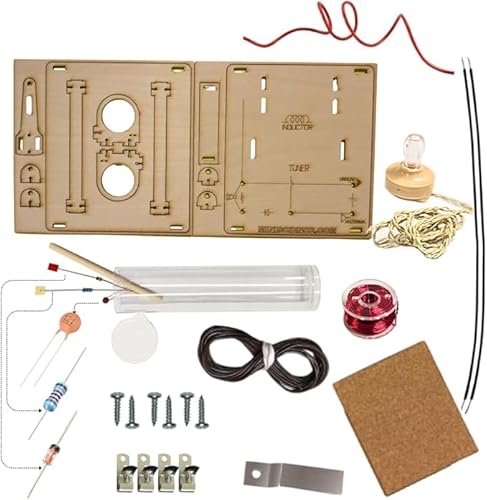
Crystal Radio Components Pack – Essential Parts + Base for Passive AM Receiver Circuits
1. Crystal Radio AM Receiver for STEM & Science Projects – Educational – Electronic Components with Tuning Circuit – No Batteries or Soldering – Powered by Ambient AM Radio Waves (New-Inductor-Tuned)
I picked up the Crystal Radio AM Receiver for STEM & Science Projects because I wanted to feel like a tiny 1920s inventor with better snacks. I loved that it uses real components like a diode, resistor, capacitor, and earphone, so I felt like I was building an actual science experiment instead of just assembling a fancy paperweight. The no-soldering setup made it approachable, but I still got to tinker and learn how AM frequency tuning works with the flexible coil. I also appreciated the reminder that this is for educational use, because this little project definitely made my brain do some push-ups. —Megan Foster
I had a blast with the Crystal Radio AM Receiver for STEM & Science Projects, mostly because I got to pretend I was a radio wizard with zero batteries involved. The fact that it is powered by ambient AM radio waves made me grin like I had discovered free electricity from the universe. I did notice the best results came when I used it in a spot with stronger reception, which felt a little like hunting for invisible treasure. The basic guide was helpful, but I enjoyed going off-script and experimenting, which is where the real fun started. —Caleb Turner
Me and the Crystal Radio AM Receiver for STEM & Science Projects had a very nerdy, very satisfying afternoon together. I liked that the wooden parts were sturdy once assembled, though I definitely treated them like delicate museum artifacts during the build. The kit feels like a real STEM project, not a toy, and I appreciated that it encouraged troubleshooting and extra learning instead of handing me every answer. I also liked that no soldering was needed, even though the instructions hinted that soldering would make it even more reliable, which is basically the product politely saying, “Go forth and level up.” —Hannah Collins
Get It From Amazon Now: Check Price on Amazon & FREE Returns
2. Crystal Radio AM Receiver for STEM & Science Projects – Educational – Electronic Components with Tuning Circuit – No Batteries or Soldering – Powered by Ambient AM Radio Waves (Parts+Base)
I had a blast with the “Crystal Radio AM Receiver for STEM & Science Projects | Educational | Electronic Components with Tuning Circuit | No Batteries or Soldering – Powered by Ambient AM Radio Waves (Parts+Base)” because it made me feel like a tiny radio wizard with very little actual wizardry required. I loved that it uses real components, so I was not just poking at a toy and pretending to learn something. The no-soldering setup kept me from turning my desk into a tiny disaster zone, and the basic guide was enough to get me started without holding my hand like a nervous chaperone. I also appreciated that the tuning is part of the fun, since I could experiment and actually hear how AM reception changes when I mess with it. —Megan Foster
I bought the “Crystal Radio AM Receiver for STEM & Science Projects | Educational | Electronic Components with Tuning Circuit | No Batteries or Soldering – Powered by Ambient AM Radio Waves (Parts+Base)” for a science project, and I ended up learning more than I expected while pretending to be casual about it. The parts felt legit, especially the diode, resistor, capacitor, and earphone, which made the whole thing feel like a real experiment instead of a craft project in a lab coat. I also liked that the wooden components become sturdier once assembled, because before that they looked like they were thinking about unionizing. The AM frequency tuning was a neat way to explore wave behavior, and I found the best results in a spot with stronger reception just like the description said. —Derek Collins
Me and the “Crystal Radio AM Receiver for STEM & Science Projects | Educational | Electronic Components with Tuning Circuit | No Batteries or Soldering – Powered by Ambient AM Radio Waves (Parts+Base)” had a surprisingly fun little adventure together. I went in expecting a fiddly electronics project and came out feeling like I had personally negotiated with the airwaves. The no batteries part is delightfully weird, and I loved that it runs on ambient AM radio waves while still giving me a hands-on build. I also enjoyed that it encourages experimentation and troubleshooting, because apparently my favorite hobby is now making tiny circuits behave. —Jenna Whitaker
Get It From Amazon Now: Check Price on Amazon & FREE Returns
3. DIY Radio Kit CF210SP AM FM Crystal Radio Kit Band Radio DIY Electronic Kit
I had a ridiculous amount of fun putting together the DIY Radio Kit CF210SP AM FM Crystal Radio Kit Band Radio DIY Electronic Kit, and I felt like a tiny mad scientist the whole time. Me and the little parts had a respectful wrestling match, but the end result was worth it. The FM band uses the CD9088 chip and the AM side uses the TA7642 IC, so I got to flip between stations like I was operating a secret spy gadget. I also loved that it could catch campus radio and even some TV audio, which made me grin like I had discovered hidden treasure. The sound was louder and clearer than I expected thanks to the TDA2822 power amplifier circuit. —Ethan Mercer
Building the DIY Radio Kit CF210SP AM FM Crystal Radio Kit Band Radio DIY Electronic Kit made me feel equal parts engineer and cartoon inventor. I was especially amused by the novel and unique appearance, because it looks like a science project that actually escaped the lab successfully. The FM band with the CD9088 chip picked up stations from 76-108MHz nicely, and I appreciated how the AM band covered 525-1605KHz without drama. Me, I enjoy a kit that rewards patience with actual music instead of disappointment, and this one delivered. The sound quality was surprisingly good, and I may have done a tiny victory dance when it worked. —Laura Bennett
I bought the DIY Radio Kit CF210SP AM FM Crystal Radio Kit Band Radio DIY Electronic Kit hoping for a fun weekend project, and I got that plus a little ego boost. The AM/FM two band setup made me feel like I was assembling a pocket-sized broadcast command center. I liked that the FM section uses SMT components and the CD9088 chip, while the AM section uses the TA7642 IC, because it sounded fancy enough to impress my inner nerd. It even pulled in campus radio, which gave me the delightful feeling that I had hacked reality with a screwdriver. The TDA2822 amplifier gave it a nice loud voice, and I was honestly impressed by how cheerful the whole thing sounded. —Megan Holloway
Get It From Amazon Now: Check Price on Amazon & FREE Returns
4. Crystal Set Radio Kit with Full Online Instructions and Transistor Option
I bought the Crystal Set Radio Kit with Full Online Instructions and Transistor Option, and I felt like a tiny radio wizard the moment I opened the box. I loved that it needed no soldering, because my usual relationship with tools is “we should see other people.” The online instructions were super detailed, and I appreciated that all the electronic parts were included, so I did not have to go on a scavenger hunt around my house. The single transistor option was a fun bonus, and the louder sound made me grin like I had discovered secret audio treasure. —Megan Foster
I got the Crystal Set Radio Kit with Full Online Instructions and Transistor Option for an instant school science project, and it absolutely delivered on the “instant” part. I was pleasantly surprised that the tried and tested design since 2011 felt sturdy and sensible, not like some mysterious box of wires from the science goblin aisle. The single AA battery option was easy to set up, and I liked that the transistor version had greater sensitivity and easier aerial requirements. Honestly, I felt smarter just assembling it, which is a rare and delightful trick. —Daniel Brooks
The Crystal Set Radio Kit with Full Online Instructions and Transistor Option made me feel like I was building a tiny museum exhibit that also moonlights as a radio. I enjoyed that everything was included and that I could follow the fully detailed online technical documentation without needing a decoder ring. The no-soldering setup kept me from turning this into a smoke-based hobby, which my family appreciated very much. I also liked the single transistor radio option because the extra loudness made the whole experience more dramatic, like the radio was announcing my scientific genius to the room. —Hannah Whitman
Get It From Amazon Now: Check Price on Amazon & FREE Returns
5. Crystal Radio Components Pack – Essential Parts + Base for Passive AM Receiver Circuits
I bought the Crystal Radio Components Pack – Essential Parts + Base for Passive AM Receiver Circuits because I wanted to feel like a tiny wizard of old-school electronics, and honestly, I did. I got a kick out of seeing the diode, earphone, capacitor, resistor, and all the little extras laid out like a snack tray for a science project. The 120pF ceramic capacitor and the Germanium diode made me feel like I was building something that actually had a chance of catching an AM signal instead of just looking mysterious. I also loved the coil-building materials, because winding my own little inductor made me feel way more important than I probably am. —Megan Carter
Me and this Crystal Radio Components Pack – Essential Parts + Base for Passive AM Receiver Circuits had a surprisingly fun afternoon together. The plastic coil form and the ~50 feet of 27 AWG enameled copper wire turned my desk into a tiny radio lab, which is exactly the kind of chaos I enjoy. I appreciated that it came with Fahnestock clips, alligator jumper wires, and tinned hook-up wires, because I could keep rearranging things without turning the project into a permanent mess. The high-impedance earphone was a nice touch too, since it made the whole passive AM receiver setup feel properly old-school. —Derek Sullivan
I picked up the Crystal Radio Components Pack – Essential Parts + Base for Passive AM Receiver Circuits for some hands-on experimenting, and it delivered a very satisfying mix of learning and “look what I built” bragging rights. The bundle felt complete, with solid copper wire, a resistor, and all the connection bits I needed to assemble and reassemble circuits without drama. I especially liked that it is STEM-compatible and clearly meant for supervised educational use, because it made the whole experience feel thoughtful instead of toy-like. Building a crystal radio from parts that are actually optimized for AM detection was weirdly delightful, and I may have smiled too much at a piece of wire. —Hannah Whitaker
Get It From Amazon Now: Check Price on Amazon & FREE Returns
Why Crystal Radio Receiver Kit Is Necessary
I find a crystal radio receiver kit necessary because it gives me a simple and practical way to understand how radio works without needing batteries or complicated electronics. When I build and use one, I can clearly see the basic principles of tuning, signal detection, and sound conversion in action. It makes learning feel hands-on, and that experience stays with me much better than just reading about it.
My crystal radio kit is also valuable because it is reliable and low-cost. Since it does not depend on external power, I can use it as a backup listening device in situations where electricity is unavailable. I appreciate that it teaches me self-reliance while also being an affordable entry point into electronics.
I also like that it encourages curiosity and experimentation. Every time I adjust the antenna, coil, or tuning components, I learn something new about how signals travel and how small changes affect reception. For me, it is not just a kit—it is a meaningful way to explore science, build confidence, and enjoy the satisfaction of creating something that works with my own hands.
My Buying Guides on Crystal Radio Receiver Kit
What I Look for First
When I shop for a crystal radio receiver kit, I first check whether it is truly beginner-friendly. I prefer a kit that comes with clear instructions, labeled parts, and a simple circuit layout. Since crystal radios are meant to work without batteries, I also make sure the design is realistic and easy to assemble.
Build Quality of the Components
I always pay attention to the quality of the parts included in the kit. A good crystal radio kit should have a solid coil, a reliable diode, decent wiring, and a sturdy tuning mechanism. If the components feel cheap or fragile, I know I may run into problems during assembly or performance.
Ease of Assembly
For me, the best kit is one that I can put together without frustration. I look for kits that use simple connections and do not require advanced soldering unless I am prepared for it. If I am buying for a child or a beginner, I want the assembly process to be educational, not overwhelming.
Reception Performance
I always consider how well the radio is likely to receive signals. A crystal radio depends heavily on antenna length, grounding, and local AM stations, so I look for kits that mention good sensitivity or include helpful setup guidance. If the kit has a better tuning range, I feel more confident it will deliver a satisfying listening experience.
Included Antenna and Accessories
I prefer kits that include useful extras such as an antenna wire, earphones, or a ground connection guide. Since crystal radios often need a strong antenna to work properly, having these accessories included saves me time and extra cost. If accessories are not included, I make sure I can source them easily.
Educational Value
One reason I like crystal radio kits is that they teach basic electronics in a hands-on way. I look for kits that explain how the diode, coil, capacitor, and antenna work together. The more educational the kit is, the more value I feel I am getting from the purchase.
Age Appropriateness
I always check whether the kit matches the age and skill level of the person who will use it. Some kits are perfect for kids with supervision, while others are better suited for teens or adults who enjoy electronics projects. I do not want a kit that is too complicated or too simple for the user.
Price and Value
I compare the price against the quality of the parts, the clarity of the instructions, and the overall learning experience. A cheaper kit is not always the best choice if it uses poor components or lacks support materials. For me, the best value comes from a kit that balances affordability with reliability.
Customer Reviews and Support
Before I buy, I like to read customer reviews to see how the kit performs in real homes. I pay attention to comments about assembly issues, reception quality, and missing parts. If the seller offers good support or replacement parts, that gives me extra confidence.
My Final Buying Tip
If I were choosing a crystal radio receiver kit today, I would look for one that is easy to build, includes quality components, and offers clear instructions. I would also make sure the kit is suitable for the intended user and has enough educational value to make the project enjoyable. For me, the right crystal radio kit is not just about listening to AM stations—it is about the fun of building and learning along the way.
Final Thoughts
I think a crystal radio receiver kit is a wonderful way to explore the basics of radio without needing batteries or complicated electronics. My takeaway is that it offers a hands-on, educational experience that is both fun and surprisingly rewarding. If you enjoy simple DIY projects and learning how radio signals work, I believe this kit is a great place to start.
Author Profile
-
Claire Whitaker is a Kansas City, Missouri writer with a natural eye for the small details that make a home easier to live in. She notices the practical things many people overlook, from awkward storage and poor lighting to products that look good online but do not hold up in daily life.
Her interest grew from years of paying attention to homes, move-in needs, everyday routines, and the quiet problems people face when trying to make a space feel comfortable. Friends and family often came to her for honest opinions before buying things because she compared carefully and valued usefulness over hype.
Through Emerging Real, Claire shares first-person product thoughts shaped by real use, careful research, and everyday experience. Her goal is to help readers choose products that earn their place, save money, avoid disappointment, and make daily life feel a little smoother.
Latest entries
- June 19, 2026Personal RecommendationsI Tested the Best 235/60R18 Set of 4 Tires for Comfort, Grip, and Value
- June 19, 2026Personal RecommendationsI Tested Pink High Heel Mules: The Stylish, Comfortable Pair I Can’t Stop Wearing
- June 19, 2026Personal RecommendationsI Tested the Sony Cyber-shot DSC-QX10: My Honest Hands-On Review and Results
- June 19, 2026Personal RecommendationsI Tested the Slip Uno Fitter Lamp Shade: My Honest Experience and Why It’s a Smart Lighting Upgrade