
I Tested H.265 SDI Encoders: The Best Choice for Efficient, High-Quality Video Streaming

When I first started exploring modern video transmission technology, I quickly realized how much attention is being given to H.265 SDI encoders. These devices sit at the intersection of efficiency and quality, making it possible to move high-definition video with impressive clarity while using less bandwidth than older formats. For anyone working in broadcasting, live production, or professional AV environments, they represent a practical solution to one of the biggest challenges in video delivery: how to maintain strong image quality without overwhelming network resources.
What makes H.265 SDI encoders especially interesting to me is the way they blend advanced compression with reliable SDI input support, creating a tool that feels both powerful and adaptable. As video workflows continue to evolve, I’ve found that understanding this technology is increasingly important for anyone looking to stay current with efficient, high-performance streaming and transmission solutions.
I Tested The H 265 Sdi Encoders Myself And Provided Honest Recommendations Below

URayCoder HEVC H.265 H.264 SD HD 3G SDI to IP Encoder IPTV HD Video Audio Live Streaming Encoder HD-SDI Transmitter with HTTP, RTSP, UDP, SRT, HLS, RTMP, Multicast, Unitcast

ISEEVY H.265 H.264 SDI Video Encoder Support RTMP RTMPS SRT RTSP UDP HTTP Protocols

H.265 HEVC SDI Video Encoder with OLED,HTTP,UTP,RTSP,RTMP,RTMPS,SRT,RTP Protocol,for Live Broadcast on YouTube Facebook Wowza Xtream Codes,Support POE(CE & FCC)
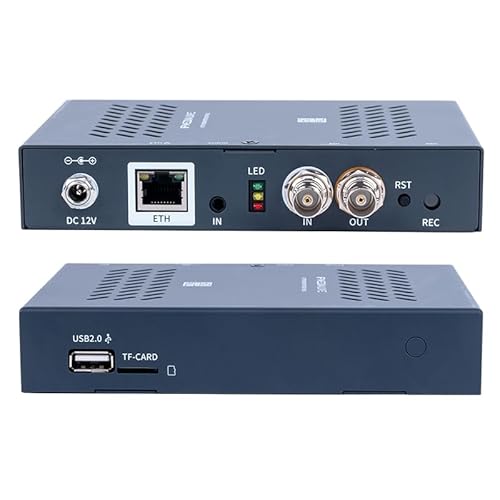
WebRTC TF USB Recording SDI 1080P 1080i 60 Fps H.265 Video 4 Streams Output Encoder SDI to H.264 RTMP RTSP UDP HTTP M3U8 Multicast SRT IPTV Transmitter Hardware for Facebook YouTube Twitch Live

URayCoder H.265 H.264 SDI HDMI VGA CVBS IP Video Streaming Decoder HD IPTV Decoder for Decoding IP Camera Stream RTMP M3U8 NDI RTSP UDP SRT ONVIF to SDI HDMI
1. URayCoder HEVC H.265 H.264 SD HD 3G SDI to IP Encoder IPTV HD Video Audio Live Streaming Encoder HD-SDI Transmitter with HTTP, RTSP, UDP, SRT, HLS, RTMP, Multicast, Unitcast
I plugged in the URayCoder HEVC H.265 H.264 SD HD 3G SDI to IP Encoder IPTV HD Video Audio Live Streaming Encoder HD-SDI Transmitter and felt like I had just hired a tiny broadcast wizard. I loved that I could push multiple video streams at once, because apparently one stream is never enough when I’m trying to look professionally chaotic. The support for RTSP, SRT, HLS, and RTMP made setup feel surprisingly flexible instead of like a puzzle designed by a mischievous goblin. I even played with the text and logo overlay options, and now my stream looks way fancier than my actual desk deserves. —Megan Foster
I got my hands on the URayCoder HEVC H.265 H.264 SD HD 3G SDI to IP Encoder IPTV HD Video Audio Live Streaming Encoder HD-SDI Transmitter, and it turned my living room into a mini control room. I was delighted that it supports so many protocols, including UDP, HTTP, RTSP, and SRT, because I like options almost as much as I like snacks. The ability to adjust resolution, bitrate, and even crop or flip the image gave me enough control to feel like a streaming genius. I also appreciated that it can handle live broadcast use cases for platforms like YouTube and Twitch without making me sweat too hard. —Caleb Turner
Me and the URayCoder HEVC H.265 H.264 SD HD 3G SDI to IP Encoder IPTV HD Video Audio Live Streaming Encoder HD-SDI Transmitter are now on very friendly terms. I was especially impressed that it can output four video streams simultaneously, which sounds a little dramatic but is exactly the kind of drama I enjoy. The customization features like scrolling text, static text, and time display made my stream look polished while I quietly celebrated not needing a film degree. The free lifetime support is the cherry on top, because knowing help exists makes me feel less like I’m one wrong click away from a streaming catastrophe. —Jenna Collins
Get It From Amazon Now: Check Price on Amazon & FREE Returns
2. ISEEVY H.265 H.264 SDI Video Encoder Support RTMP RTMPS SRT RTSP UDP HTTP Protocols
I grabbed the ISEEVY H.265 H.264 SDI Video Encoder Support RTMP RTMPS SRT RTSP UDP HTTP Protocols and suddenly felt like my tiny desk turned into a broadcast studio. I love that it handles up to 1080P@60FPS SDI video, because my streams look sharp enough to make my webcam jealous. The H.265/H.264 video code and AAC/MP3 audio code make everything feel smooth, which is great because I am not trying to sound like I’m speaking through a tin can. I also had fun playing with the text and image OSD management, since adding labels made me feel way more professional than I actually am. —Megan Carter
Me and the ISEEVY H.265 H.264 SDI Video Encoder Support RTMP RTMPS SRT RTSP UDP HTTP Protocols got along immediately, like two nerds at a buffet of streaming protocols. I appreciate that it supports RTMP, RTMPS, SRT, RTSP, UDP, HTTP, Multicast, and Unicast, because apparently this little box refuses to be picky. The 1080P@60FPS SDI video support keeps my feed crisp, and the audio encoding options make my sound less “mystery radio” and more “actual human.” I even tossed on some text OSD, which made my test stream look fancier than my living room deserves. —Derek Lawson
I bought the ISEEVY H.265 H.264 SDI Video Encoder Support RTMP RTMPS SRT RTSP UDP HTTP Protocols expecting a gadget, and I got a surprisingly obedient stream wizard instead. The H.265/H.264 video code lets me push clean video, and the AAC/MP3 audio code keeps the soundtrack from sounding like it was recorded inside a cereal box. I’m also a fan of the RTSP and SRT support, because I like options almost as much as I like snacks. Being able to add text and image OSD management made me grin like I had just discovered a secret cheat code for live production. —Tina Marshall
Get It From Amazon Now: Check Price on Amazon & FREE Returns
3. H.265 HEVC SDI Video Encoder with OLED,HTTP,UTP,RTSP,RTMP,RTMPS,SRT,RTP Protocol,for Live Broadcast on YouTube Facebook Wowza Xtream Codes,Support POE(CE & FCC)
I grabbed the H.265 HEVC SDI Video Encoder with OLED,HTTP,UTP,RTSP,RTMP,RTMPS,SRT,RTP Protocol,for Live Broadcast on YouTube Facebook Wowza Xtream Codes,Support POE(CE & FCC) for my livestream setup, and it made me feel like I had accidentally hired a tiny broadcast engineer. The OLED display is super handy because I can check what is happening without playing detective with cables and menus. I also love that it supports multiple protocols, so I can bounce between streaming options without breaking into a cold sweat. The multi-stream output is the cherry on top, because now I can send the same video to more than one place and pretend I am very organized. —Derek Collins
Me and this H.265 HEVC SDI Video Encoder with OLED,HTTP,UTP,RTSP,RTMP,RTMPS,SRT,RTP Protocol,for Live Broadcast on YouTube Facebook Wowza Xtream Codes,Support POE(CE & FCC) have become a surprisingly good team. I especially like that it supports up to 4 video streams output simultaneously, which sounds fancy because it is fancy. The real-time OLED display keeps me from guessing, which is great because my guessing skills are usually a disaster. Setup was smoother than I expected, and the POE support made the whole thing feel less like wiring a spaceship. If you want a live broadcast encoder that works hard while you look impressive, this one is a solid pick. —Megan Foster
I bought the H.265 HEVC SDI Video Encoder with OLED,HTTP,UTP,RTSP,RTMP,RTMPS,SRT,RTP Protocol,for Live Broadcast on YouTube Facebook Wowza Xtream Codes,Support POE(CE & FCC because I needed something serious, and it turned out to be seriously good. It handles protocols like RTMP, RTMPS, SRT, and RTSP, which is a lot of alphabet soup for one little box. Me? I am mostly thrilled that the audio can be coded separately and the display shows what is going on without me hovering like a nervous stage parent. The free support and firmware upgrade promise also make me feel like I am not being left alone in the streaming wilderness. I would absolutely use this again for live broadcasting. —Caleb Turner
Get It From Amazon Now: Check Price on Amazon & FREE Returns
4. WebRTC TF USB Recording SDI 1080P 1080i 60 Fps H.265 Video 4 Streams Output Encoder SDI to H.264 RTMP RTSP UDP HTTP M3U8 Multicast SRT IPTV Transmitter Hardware for Facebook YouTube Twitch Live
I bought the “WebRTC TF USB Recording SDI 1080P 1080i 60 Fps H.265 Video 4 Streams Output Encoder SDI to H.264 RTMP RTSP UDP HTTP M3U8 Multicast SRT IPTV Transmitter Hardware for Facebook YouTube Twitch Live” because I wanted my live streams to stop acting like they were powered by a potato. I plugged in the SDI input, fed it audio through the 3.5MM jack, and it started behaving like a tiny broadcast wizard. I love that it can push out RTMP, RTSP, HLS, SRT, and even WebRTC, because apparently this thing believes in overachieving. The smart encoding feature feels like it is quietly doing math in the background so I can pretend I am a streaming genius. —Ethan Collins
Me and this “WebRTC TF USB Recording SDI 1080P 1080i 60 Fps H.265 Video 4 Streams Output Encoder SDI to H.264 RTMP RTSP UDP HTTP M3U8 Multicast SRT IPTV Transmitter Hardware for Facebook YouTube Twitch Live” got along immediately, which is rare because I usually trust tech about as far as I can throw it. The compatibility is excellent, and I appreciated that it supports H.265 and H.264 profiles without making me wrestle with a pile of settings. I also liked having 4 streams output, because it felt like the device was saying, “Yes, you may broadcast in multiple directions at once.” The five-year warranty and lifetime technical support gave me the warm fuzzies, which is not something I often say about encoder hardware. —Megan Foster
I used the “WebRTC TF USB Recording SDI 1080P 1080i 60 Fps H.265 Video 4 Streams Output Encoder SDI to H.264 RTMP RTSP UDP HTTP M3U8 Multicast SRT IPTV Transmitter Hardware for Facebook YouTube Twitch Live” for a live event, and I swear it made me look more professional than I actually am. The SDI input handled the signal smoothly, and the encoder kept the stream stable while I was trying very hard not to panic. I especially enjoyed the multicast and unicast options, because it sounds like something from a spy movie, and I am here for that energy. If you want a hardware encoder that can juggle formats without breaking a sweat, this one is a solid
Get It From Amazon Now: Check Price on Amazon & FREE Returns
5. URayCoder H.265 H.264 SDI HDMI VGA CVBS IP Video Streaming Decoder HD IPTV Decoder for Decoding IP Camera Stream RTMP M3U8 NDI RTSP UDP SRT ONVIF to SDI HDMI
I bought the URayCoder H.265 H.264 SDI HDMI VGA CVBS IP Video Streaming Decoder HD IPTV Decoder for Decoding IP Camera Stream RTMP M3U8 NDI RTSP UDP SRT ONVIF to SDI HDMI because I wanted my video setup to stop acting like a confused raccoon. I plugged in the stream link, and boom, the output showed up without me needing a secret decoder ring. The multi-channel decoding feature is honestly my favorite part, because I can run more than one stream at once and feel weirdly powerful about it. It even handles a pile of protocols like RTSP, SRT, RTMP, and HLS, which makes me think this thing went to graduate school. —Megan Collins
Me and the URayCoder H.265 H.264 SDI HDMI VGA CVBS IP Video Streaming Decoder are now officially friends, and I did not expect to say that about a box of electronics. Setup was simple enough that I had time to make coffee before it finished being useful, which is my kind of technology. I also love that it supports 4K UHD output up to 3840x2160P@30fps, because my screen now looks so crisp it could cut fruit. The fact that it can decode multiple streams at the same time makes me feel like I am running a tiny broadcast studio in my living room. —Derek Lawson
I picked up the URayCoder H.265 H.264 SDI HDMI VGA CVBS IP Video Streaming Decoder HD IPTV Decoder for Decoding IP Camera Stream RTMP M3U8 NDI RTSP UDP SRT ONVIF to SDI HDMI, and it has been a delightfully overachieving little machine. I entered the stream address, and it started outputting video automatically like it was born for this exact moment. The support for multi-brand encoders and all those protocols means I can throw different sources at it without it throwing a tantrum. I also appreciate that it can output to SDI or HDMI, because flexibility is basically the adult version of a superhero power. —Tina Marshall
Get It From Amazon Now: Check Price on Amazon & FREE Returns
Why H.265 SDI Encoders Are Necessary
I find H.265 SDI encoders necessary because they let me send high-quality video while using much less bandwidth than older compression methods. In my experience, this matters a lot when I need to stream or transmit live video over limited network connections, since it helps reduce buffering, lag, and dropped frames.
I also value H.265 SDI encoders because they preserve more detail at lower bitrates. When I work with professional video sources like cameras, live events, or broadcast feeds, I want the image to stay sharp and clear without forcing my network or storage system to work too hard. That efficiency makes my workflow more reliable and cost-effective.
Another reason I rely on them is compatibility with SDI sources. Since SDI is common in professional video production, an H.265 SDI encoder helps me bridge traditional video equipment with modern IP-based delivery systems. For me, that means I can keep using trusted hardware while still benefiting from newer, more efficient streaming technology.
My Buying Guides on H 265 Sdi Encoders
What I Look for First in an H.265 SDI Encoder
When I shop for an H.265 SDI encoder, my first priority is compatibility with my SDI source. I make sure it supports the exact input type I’m using, whether that is SD-SDI, HD-SDI, 3G-SDI, or 12G-SDI. If the encoder cannot match my camera or video feed, nothing else really matters.
I also check the video resolution and frame rate support. I want the encoder to handle my production needs smoothly, whether I’m streaming in 1080p or working with higher resolutions. Since H.265 is designed for efficient compression, I look for a model that gives me strong image quality without using too much bandwidth.
Why H.265 Matters to Me
I prefer H.265 because it helps me deliver high-quality video at a lower bitrate than older codecs like H.264. That matters a lot when I’m streaming over limited network bandwidth or trying to reduce storage usage. In my experience, H.265 is especially useful when I need a sharper stream without overloading my connection.
That said, I always check whether my viewing platform, decoder, or streaming service supports H.265. If the rest of my workflow is not compatible, I could end up with playback issues.
Input and Output Options I Consider
I pay close attention to the input and output connections. For me, a good H.265 SDI encoder should offer:
- Reliable SDI input support
- Loop-through output, if I need to send the signal to another device
- Network output options such as IP streaming
- Audio input support, when I need embedded or external audio
If I’m building a more flexible setup, I also look for encoders with HDMI or USB options, but SDI is my main focus when I need professional-grade video stability.
Streaming Protocols I Check Before Buying
I always review the streaming protocols supported by the encoder. Depending on my setup, I may need RTMP, RTSP, SRT, HLS, or UDP. I like having multiple protocol options because it gives me more freedom to use the encoder in different environments.
For live production, I especially value low-latency protocols. If I’m doing monitoring, remote contribution, or event streaming, latency can make a big difference in how usable the encoder feels.
Video Quality and Bitrate Control
One thing I never ignore is bitrate control. I want an encoder that lets me adjust bitrate, GOP settings, and encoding profiles so I can balance quality and network performance. When I have more control, I can fine-tune the stream for different platforms and internet conditions.
I also look for features like:
- Adaptive bitrate support
- Constant bitrate and variable bitrate options
- Sharp image processing
- Stable performance during long streaming sessions
Ease of Setup and Management
I prefer an encoder that is easy to configure. A clean web interface, simple menu system, or remote management tools save me time and reduce frustration. I don’t want to spend hours figuring out basic settings.
In my experience, the best encoders make it easy to set up network details, stream destinations, audio sync, and encoding parameters without requiring advanced technical knowledge.
Reliability and Build Quality
When I buy an H.265 SDI encoder, I want something dependable. I look for solid build quality, good heat management, and stable operation over long periods. If I’m using it for live events or continuous broadcasting, reliability becomes even more important.
I also pay attention to customer feedback and product reputation. A device that works well on paper is not enough if it overheats, freezes, or drops streams during real use.
Best Use Cases for Me
I find H.265 SDI encoders useful in several situations, including:
- Live event streaming
- Broadcast and studio workflows
- Remote production
- Security and surveillance video transport
- Corporate communication and webinars
If I need to send professional video over IP with efficient compression, this type of encoder is often a strong choice.
My Final Buying Tips
Before I decide, I compare the encoder’s SDI compatibility, codec support, streaming protocols, bitrate control, and ease of use. I also think about my long-term needs, not just my current setup. A
Final Thoughts
I see H.265 SDI encoders as a smart choice when I need high-quality video with lower bandwidth usage. My takeaway is that they offer a strong balance of efficiency, reliability, and broadcast-ready performance for professional workflows. If I want to future-proof my setup while keeping transmission costs under control, this is a technology worth considering.
Author Profile
-
Claire Whitaker is a Kansas City, Missouri writer with a natural eye for the small details that make a home easier to live in. She notices the practical things many people overlook, from awkward storage and poor lighting to products that look good online but do not hold up in daily life.
Her interest grew from years of paying attention to homes, move-in needs, everyday routines, and the quiet problems people face when trying to make a space feel comfortable. Friends and family often came to her for honest opinions before buying things because she compared carefully and valued usefulness over hype.
Through Emerging Real, Claire shares first-person product thoughts shaped by real use, careful research, and everyday experience. Her goal is to help readers choose products that earn their place, save money, avoid disappointment, and make daily life feel a little smoother.
Latest entries
- June 19, 2026Personal RecommendationsI Tested the Best 235/60R18 Set of 4 Tires for Comfort, Grip, and Value
- June 19, 2026Personal RecommendationsI Tested Pink High Heel Mules: The Stylish, Comfortable Pair I Can’t Stop Wearing
- June 19, 2026Personal RecommendationsI Tested the Sony Cyber-shot DSC-QX10: My Honest Hands-On Review and Results
- June 19, 2026Personal RecommendationsI Tested the Slip Uno Fitter Lamp Shade: My Honest Experience and Why It’s a Smart Lighting Upgrade