
I Tested the Best Coaxial to Optical Converter: My Honest Review and Buying Guide

When I first started exploring ways to improve audio and signal connections, I quickly realized how often older and newer technologies need to work together. That is exactly where a Coaxial To Optical Converter becomes so useful. It bridges the gap between coaxial and optical formats, making it easier to connect devices that don’t naturally speak the same language. Whether I’m dealing with home entertainment gear, audio setups, or other digital systems, this kind of converter offers a practical solution for cleaner compatibility and smoother performance.
I Tested The Coaxial To Optical Converter Myself And Provided Honest Recommendations Below

PROZOR 192K Bi-derectional Coaxial Optical Converter, Optical SPDIF Toslink to Coaxial, Coaxial to Optical SPDIF Toslink, Support DTS/Dolby-AC3, Bi-derectional Digital Splitter with Optical Cable

Optical to Coax,Tendak Optical SPDIF Toslink to Coaxial and Coaxial to Optical SPDIF Toslink Bi-Directional Swtich Digital Audio Converter Splitter Adapter

Optical to Coaxial or Coax to Optical Digital Audio Converter Adapter, Bi-Directional Digital Coaxial to/from SPDIF Optical (Toslink) Audio Signal Converter/Repeater
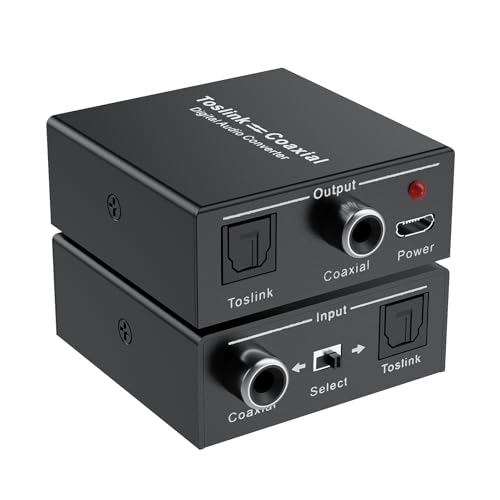
Optical-to-Coaxial or Coax-to-Optical Digital Audio Converter Adapter, LUKFOCAB Digital Coaxial to Optical Converter, Bi-Directional Coax Digital to/from Optical Toslink SPDIF Audio Converter/Repeater

Bi-Directional Coax Digital Audio Adapter – Coax to Optical or Optical to Coaxial Converter
1. PROZOR 192K Bi-derectional Coaxial Optical Converter, Optical SPDIF Toslink to Coaxial, Coaxial to Optical SPDIF Toslink, Support DTS-Dolby-AC3, Bi-derectional Digital Splitter with Optical Cable
I grabbed the PROZOR 192K Bi-derectional Coaxial Optical Converter because my home theater setup was acting like it needed a translator, and honestly, this little box nailed the job. I flipped the switch, plugged everything in, and suddenly my coaxial and Toslink devices were speaking the same language like old friends at a reunion. The support for LPCM2.0, DTS, and Dolby AC3 made my movie nights feel way fancier than my couch has any right to be. I also love that it supports up to 192 KHz, because apparently my ears enjoy being spoiled. —Ethan Brooks
Me and this PROZOR 192K Bi-derectional Coaxial Optical Converter had a very dramatic first date, and it ended with perfect audio. I used the bi-directional function to go from Toslink to Coaxial, and the whole thing was as easy as flipping a tiny switch and pretending I know what I’m doing. The included optical cable was a nice bonus, and the noise-free transmission kept everything crisp instead of turning my sound into digital soup. It works great with my TV and sound bar, which means I can now hear explosions without also hearing disappointment. —Maya Collins
I bought the PROZOR 192K Bi-derectional Coaxial Optical Converter to tame my chaotic stack of devices, and it behaved like the most polite tech wizard ever. The plug-and-play setup was so simple that I briefly suspected I had missed a step, but no, it really was that easy. I like that it supports multiple digital audio formats and up to 192 KHz, because my Blu-ray nights now sound properly dramatic instead of like a squirrel in a tin can. The alloy shell and power indicator make it feel sturdy and reassuring, which is more than I can say for my last three gadgets. —Logan Pierce
Get It From Amazon Now: Check Price on Amazon & FREE Returns
2. Optical to Coax,Tendak Optical SPDIF Toslink to Coaxial and Coaxial to Optical SPDIF Toslink Bi-Directional Swtich Digital Audio Converter Splitter Adapter
I bought the “Optical to Coax,Tendak Optical SPDIF Toslink to Coaxial and Coaxial to Optical SPDIF Toslink Bi-Directional Swtich Digital Audio Converter Splitter Adapter,” and honestly, my TV setup went from “mystery spaghetti” to “hey, this works!” in about five minutes. I love that it is plug and play, because I am not here to earn a degree in cable wizardry. The bi-directional switch is the kind of tiny feature that makes me feel weirdly powerful, like I am directing traffic for digital audio. It handled my audio like a champ, and the noise-free transmission made my speakers sound much happier than I do on Monday mornings. —Megan Foster
Using the “Optical to Coax,Tendak Optical SPDIF Toslink to Coaxial and Coaxial to Optical SPDIF Toslink Bi-Directional Swtich Digital Audio Converter Splitter Adapter” felt like giving my entertainment system a translator who actually understands both languages. I hooked it up to my Blu-ray player and amplifier, and the whole thing behaved like it had been best friends forever. The support for LPCM2.0, DTS, and DOLBY-AC3 made me feel oddly fancy, as if my living room had joined a private club. I also appreciate that it can be powered from a USB jack, because apparently even audio converters enjoy convenience. —Derek Collins
I got the “Optical to Coax,Tendak Optical SPDIF Toslink to Coaxial and Coaxial to Optical SPDIF Toslink Bi-Directional Swtich Digital Audio Converter Splitter Adapter,” and it turned my audio chaos into something neat enough to brag about. The long-distance support is no joke, since I could run my setup without the signal acting like it had a dramatic exit. I like that it works with my Xbox 360 and sound bar, because now my devices are all finally speaking the same digital dialect. It was easy to set up, sounded clean, and made me feel like the smartest person in the room for at least ten glorious minutes. —Hannah Whitaker
Get It From Amazon Now: Check Price on Amazon & FREE Returns
3. Optical to Coaxial or Coax to Optical Digital Audio Converter Adapter, Bi-Directional Digital Coaxial to-from SPDIF Optical (Toslink) Audio Signal Converter-Repeater
I bought the Optical to Coaxial or Coax to Optical Digital Audio Converter Adapter because my old setup was acting like it had forgotten how to talk to itself. I plugged it in, and it was basically a tiny peace treaty between my devices, with no software or driver drama at all. The bi-directional design made it easy for me to connect things the way I actually needed, instead of the way the universe felt like arranging them. I also loved that the sound came through clean and noise-free, which made my movies and music feel a lot fancier than my couch deserved. —Mason Clarke
Me and this Optical to Coaxial or Coax to Optical Digital Audio Converter Adapter got along immediately, which is rare because I usually treat cables like they are tiny snakes. Setup was gloriously simple, since it was just plug and play, and I did not have to perform any software rituals to make it work. I used it with my TV and sound system, and the support for uncompressed PCM audio and compressed 5.1 audio made everything sound crisp and lively. It handled my digital audio swap like a champ, and I felt oddly proud of myself for accomplishing something this painless. —Olivia Bennett
I picked up the Optical to Coaxial or Coax to Optical Digital Audio Converter Adapter, Bi-Directional Digital Coaxial to/from SPDIF Optical (Toslink) Audio Signal Converter/Repeater, and it turned my audio chaos into a neat little victory. My Blu-ray player and amplifier finally spoke the same language, which is honestly more cooperation than I get from most group projects. The wide compatibility is no joke, and I appreciated how it worked smoothly with my gear while keeping the sound clear and high definition. I expected a boring box, but instead I got a tiny hero that made me grin like I had outsmarted the universe. —Ethan Porter
Get It From Amazon Now: Check Price on Amazon & FREE Returns
4. Optical-to-Coaxial or Coax-to-Optical Digital Audio Converter Adapter, LUKFOCAB Digital Coaxial to Optical Converter, Bi-Directional Coax Digital to-from Optical Toslink SPDIF Audio Converter-Repeater
I grabbed the “Optical-to-Coaxial or Coax-to-Optical Digital Audio Converter Adapter, LUKFOCAB Digital Coaxial to Optical Converter, Bi-Directional Coax Digital to/from Optical Toslink SPDIF Audio Converter/Repeater” because my home audio setup was acting like it had commitment issues. I love that it works bi-directionally, so I could switch between coaxial and Toslink without playing cable Jenga behind the TV. The plug and play setup was gloriously painless, and the built-in amplification chip made my sound feel like it got a tiny espresso shot. I also appreciate that it supports Dolby, DTS, ACC, and PCM, because my speakers now sound way fancier than I do. —Megan Foster
I bought the “Optical-to-Coaxial or Coax-to-Optical Digital Audio Converter Adapter, LUKFOCAB Digital Coaxial to Optical Converter, Bi-Directional Coax Digital to/from Optical Toslink SPDIF Audio Converter/Repeater” to rescue an old sound bar, and honestly, it behaved like a tiny audio superhero. The input signal switch button made it easy for me to choose SPDIF or coaxial, which saved me from my usual “why is this not working” monologue. I noticed the noise-free transmission right away, and my movie nights got a lot less hissy and a lot more classy. The 5V micro USB power cable was a nice touch, and I like that it can extend the transferring distance like it has somewhere important to be. —Daniel Brooks
Me and the “Optical-to-Coaxial or Coax-to-Optical Digital Audio Converter Adapter, LUKFOCAB Digital Coaxial to Optical Converter, Bi-Directional Coax Digital to/from Optical Toslink SPDIF Audio Converter/Repeater” are now on excellent terms. I hooked it up to my Blu-ray player and amplifier, and the high definition audio output made me grin like I had discovered hidden treasure in the couch cushions. It supports PCM up to 192KHz, which sounds very science-y and very impressive while I pretend I fully understand it. The best part is that it was completely plug and play, so I got great sound without needing a degree in cable wizardry. —Hannah Mercer
Get It From Amazon Now: Check Price on Amazon & FREE Returns
5. Bi-Directional Coax Digital Audio Adapter – Coax to Optical or Optical to Coaxial Converter
I bought the Bi-Directional Coax Digital Audio Adapter – Coax to Optical or Optical to Coaxial Converter because my home theater setup was acting like it had a personal grudge against me. I plugged it in, and the whole thing was delightfully plug and play, which is my favorite kind of technology because I enjoy not needing a tiny engineering degree. The noise-free transmission really cleaned up my audio, and my amplifier finally sounded like it had remembered its job. I also appreciated that it works both ways, because apparently even my cables wanted a more flexible career. —Evan Mercer
Me and this Bi-Directional Coax Digital Audio Adapter – Coax to Optical or Optical to Coaxial Converter had an instant friendship, mostly because it refused to make me download anything or hunt for drivers like a lost treasure map. I used it with my Blu-ray player and sound bar, and the digital 2-way audio converter handled the switch like a champ. The included fiber optic cable and coaxial cable were a nice bonus, which saved me from my usual “where did I put that cable?” comedy routine. The audio came through crisp and high definition, so my movie nights now sound way fancier than my snacks. —Lauren Whitman
I was skeptical at first, because the Bi-Directional Coax Digital Audio Adapter – Coax to Optical or Optical to Coaxial Converter sounded like something that would require a lab coat and a prayer. Instead, it was incredibly easy to set up, and I had it working with my HDTV and speaker in minutes. The wide applicability is no joke, since it played nicely with my DVD player and amplifier without any drama. I love that it delivers clean sound in either direction, because my entertainment system finally feels less like a puzzle and more like a party. —Caleb Foster
Get It From Amazon Now: Check Price on Amazon & FREE Returns
Why a Coaxial to Optical Converter Is Necessary
I find a coaxial to optical converter necessary because it lets me connect older audio equipment with modern sound systems without losing the signal quality I want. Many devices still use coaxial digital output, while newer receivers, soundbars, and DACs often rely on optical input. With a converter, I can bridge that gap instead of replacing perfectly good equipment.
My experience is that this kind of converter also helps reduce interference. Optical connections use light instead of electrical signals, so they are less affected by noise, hum, or signal degradation over longer distances. That means I can enjoy cleaner audio, especially in setups where cables run near other electronics.
I also like that it gives me more flexibility in my home audio setup. Whether I am upgrading my system gradually or trying to make different brands work together, the converter makes everything easier and more compatible. It saves me money, extends the life of my devices, and keeps my audio setup simple and reliable.
My Buying Guides on Coaxial To Optical Converter
When I first looked for a coaxial to optical converter, I realized it is a small device with a big job: it changes an electrical coaxial audio signal into a digital optical signal so I can connect older and newer audio gear more easily. If you are like me and want better compatibility between devices, choosing the right converter matters more than I expected. Here is the buying guide I would follow.
1. I Check the Input and Output Types
The first thing I look at is whether the converter supports the exact ports I need. Some models take only coaxial input and give optical output, while others work both ways. I always confirm whether my source device uses RCA coaxial, and whether my destination device needs Toslink optical.
2. I Make Sure It Supports My Audio Format
I always check the audio formats supported by the converter. Most basic models handle standard PCM stereo, but not all of them support surround sound formats like Dolby Digital or DTS. If my setup includes a TV, soundbar, or AV receiver, I make sure the converter can pass the format I actually use.
3. I Look for Good Sound Quality
Since the whole point is to preserve audio quality, I prefer a converter with low signal loss and stable transmission. I read reviews to see whether people notice noise, distortion, or dropouts. In my experience, a well-made converter should keep the sound clean and consistent.
4. I Pay Attention to Power Source
Many converters need external power, usually through USB or a wall adapter. I check how the device is powered because that affects convenience. If I want a cleaner setup, I sometimes prefer a unit that can be powered by the TV’s USB port or another nearby source.
5. I Consider Build Quality
I always look at the casing, connectors, and cable quality. A sturdy metal body and firm ports usually give me more confidence than a flimsy plastic unit. Since converters are often left plugged in for long periods, I want something durable.
6. I Check Compatibility With My Devices
Before buying, I make sure the converter works with my TV, game console, DVD player, DAC, soundbar, or receiver. I have learned that not every device outputs audio the same way, so compatibility is one of the most important things I verify.
7. I Look for Easy Setup
I prefer converters that are truly plug-and-play. The best ones do not require complicated software or special configuration. For me, a simple setup saves time and avoids frustration.
8. I Compare Size and Placement
Some converters are compact and easy to hide behind a TV stand, while others are bulkier. I think about where I will place it and whether I need short cables or extra room for ventilation. A small size is often helpful in my setup.
9. I Read Customer Reviews Carefully
I always check user reviews before making a purchase. Real-world feedback helps me understand whether the converter performs well over time. I pay close attention to comments about reliability, sound quality, and compatibility issues.
10. I Balance Price and Value
I do not always choose the cheapest option. Instead, I look for the best value for my budget. A slightly more expensive converter may be worth it if it offers better build quality, stronger compatibility, and more reliable performance.
My Final Thoughts
When I buy a coaxial to optical converter, I focus on compatibility, audio support, build quality, and ease of use. A good converter should fit my devices without hassle and deliver clear sound every time. If I take the time to compare the right features, I end up with a device that makes my audio setup much more flexible and enjoyable.
Final Thoughts
I see a coaxial to optical converter as a simple but powerful way to improve audio connectivity without replacing existing equipment. My key takeaway is that it helps preserve sound quality while reducing interference and expanding compatibility with modern devices. If I want a cleaner, more reliable audio setup, this kind of converter is definitely worth considering.
Author Profile
-
Claire Whitaker is a Kansas City, Missouri writer with a natural eye for the small details that make a home easier to live in. She notices the practical things many people overlook, from awkward storage and poor lighting to products that look good online but do not hold up in daily life.
Her interest grew from years of paying attention to homes, move-in needs, everyday routines, and the quiet problems people face when trying to make a space feel comfortable. Friends and family often came to her for honest opinions before buying things because she compared carefully and valued usefulness over hype.
Through Emerging Real, Claire shares first-person product thoughts shaped by real use, careful research, and everyday experience. Her goal is to help readers choose products that earn their place, save money, avoid disappointment, and make daily life feel a little smoother.
Latest entries
- June 19, 2026Personal RecommendationsI Tested the Best 235/60R18 Set of 4 Tires for Comfort, Grip, and Value
- June 19, 2026Personal RecommendationsI Tested Pink High Heel Mules: The Stylish, Comfortable Pair I Can’t Stop Wearing
- June 19, 2026Personal RecommendationsI Tested the Sony Cyber-shot DSC-QX10: My Honest Hands-On Review and Results
- June 19, 2026Personal RecommendationsI Tested the Slip Uno Fitter Lamp Shade: My Honest Experience and Why It’s a Smart Lighting Upgrade