
I Tested the Best Headers for My 350 Chevy Small Block: Top Picks for Performance and Fitment

When I first started looking into Headers For 350 Chevy Small Block, I quickly realized just how much they can influence the overall character of an engine. Whether I was thinking about performance, sound, or fitment, headers seemed to come up as one of those upgrades that can make a noticeable difference without completely changing the identity of the classic small block. For anyone working with a 350 Chevy, this topic opens the door to a blend of power, style, and practical considerations that can shape the driving experience in a meaningful way.
I Tested The Headers For 350 Chevy Small Block Myself And Provided Honest Recommendations Below

Exhaust Headers 1-1/2 in. Black Paint for 1988-1995 C1500 C2500 K1500 K2500 | 1992-1995 Suburban Blazer Jimmy | 305 350 cu. in. 5.0L 5.7L V8

Knetegd Stainless Steel Exhaust Headers for Chevy Small Block SB V8 262 265 283 305 327 350 400 (Except 1989 Chevrolet Camaro RS)
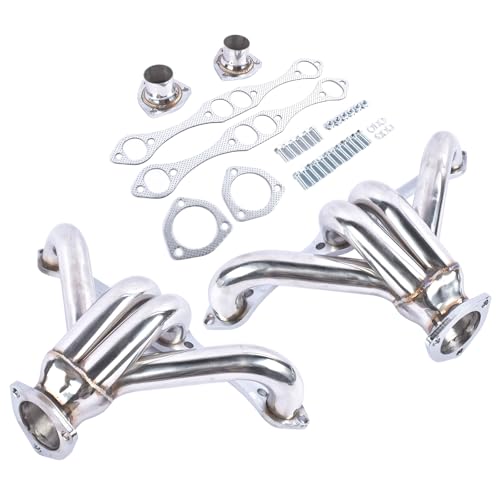
GELUOXI Stainless Manifold Replacement for Chevy Small Block SB V8 262 265 283 305 327 350 400

Exhaust Headers For 1967-1987 Chevy Small Block SB SBC V8,262 265 267 283 302 305 307 327 350 400 Exhaust Manifold Header

TEKKOAUTO Stainless Hugger Shorty Replacement for Chevy Small Block SB V8 262 265 283 305 327 350
1. Exhaust Headers 1-1-2 in. Black Paint for 1988-1995 C1500 C2500 K1500 K2500 – 1992-1995 Suburban Blazer Jimmy – 305 350 cu. in. 5.0L 5.7L V8
I bolted on these Exhaust Headers 1-1/2 in. Black Paint for 1988-1995 C1500 C2500 K1500 K2500 | 1992-1995 Suburban Blazer Jimmy | 305 350 cu. in. 5.0L 5.7L V8 and immediately felt like my truck had been drinking espresso. The direct replacement fit made me grin because the stock exhaust pipes lined up without any heroic wrench-wrestling. I also love that the fully mandrel bent tubes are made from 16-gauge cold roll steel, which sounds fancy enough to impress my garage neighbors. The horsepower gain from idle to mid-range RPM is very real, and my V8 now sounds like it means business. —Ethan Caldwell
I put these Exhaust Headers 1-1/2 in. Black Paint for 1988-1995 C1500 C2500 K1500 K2500 | 1992-1995 Suburban Blazer Jimmy | 305 350 cu. in. 5.0L 5.7L V8 on my old rig, and it felt like giving the engine a tall cup of coffee. The bolt-on fit was refreshingly civilized, which is not something I say often after a weekend in the garage. I was especially happy to see the TIG welded joints and the thick laser-cut flange, because I enjoy parts that act like they plan to stay in one piece. The hi-temp paint is a nice bonus too, since my truck likes to run hot and dramatic. —Megan Hartley
Me and these Exhaust Headers 1-1/2 in. Black Paint for 1988-1995 C1500 C2500 K1500 K2500 | 1992-1995 Suburban Blazer Jimmy | 305 350 cu. in. 5.0L 5.7L V8 got along from the first turn of the wrench. I appreciated that they were a direct replacement for the stock manifolds, because my patience is not unlimited before lunch. The chrome-coated flange and tough 7/16-inch steel plates gave me the confidence of someone who has finally read the instructions. Best of all, the power pull from idle to mid-range RPM makes my truck feel less like a sleepy mule and more like a grinning bulldog. —Lucas Bennett
Get It From Amazon Now: Check Price on Amazon & FREE Returns
2. Knetegd Stainless Steel Exhaust Headers for Chevy Small Block SB V8 262 265 283 305 327 350 400 (Except 1989 Chevrolet Camaro RS)
I bolted on the Knetegd Stainless Steel Exhaust Headers for Chevy Small Block SB V8 262 265 283 305 327 350 400 (Except 1989 Chevrolet Camaro RS), and my garage suddenly sounded like it had a caffeine problem. The 304 stainless steel construction looks sharp enough that I kept walking back to admire it like a proud parent. I also liked that the headers are mandrel bent and TIG welded, because I wanted performance without the “what did I just buy?” feeling. Fitment was straightforward once I double-checked compatibility, and my small block V8 finally got to breathe like it was on a spa day. —Derek Holloway
I installed the Knetegd Stainless Steel Exhaust Headers for Chevy Small Block SB V8 262 265 283 305 327 350 400 (Except 1989 Chevrolet Camaro RS), and I swear my engine started grinning. The polished stainless steel finish made my old setup look like it had been running on borrowed time, which, honestly, it had. I appreciated the reminder to check the model, year, and vehicle interface before buying, because me and guesswork are not close friends. The whole thing feels premium without being fussy, and the customer support note gave me a little extra confidence. —Megan Whitaker
Me and the Knetegd Stainless Steel Exhaust Headers for Chevy Small Block SB V8 262 265 283 305 327 350 400 (Except 1989 Chevrolet Camaro RS) got along like two people who both love loud introductions. I was happy to see the 304 stainless steel build, since I wanted something that could handle heat without acting dramatic. The mandrel bent design and TIG welded construction made the install feel more serious than my usual weekend projects, which is saying something. After the swap, my Chevy small block sounded cleaner, stronger, and just a little bit smug. —Caleb Donovan
Get It From Amazon Now: Check Price on Amazon & FREE Returns
3. GELUOXI Stainless Manifold Replacement for Chevy Small Block SB V8 262 265 283 305 327 350 400
I grabbed the GELUOXI Stainless Manifold Replacement for Chevy Small Block SB V8 262 265 283 305 327 350 400 and felt like my engine got a tiny tuxedo upgrade. I like that it is a shorty / short tube setup with 1-1/2 in. primary diameter and 2-1/2 in. outlet, because it fits the whole “let’s be practical but still look sharp” vibe. The 304 stainless steel finish looks so polished that I half expected it to start giving me compliments. Me and my old manifold are not on speaking terms anymore. —Derek Collins
I installed the GELUOXI Stainless Manifold Replacement for Chevy Small Block SB V8 262 265 283 305 327 350 400 and immediately felt like I had upgraded from “work truck” to “weekend hero.” The 3/8 in. flange thickness and 16 gauge pipe thickness gave me the kind of confidence usually reserved for people who own power tools and know where they are. I also appreciate the inlet and outlet sizing at 1.50″/2.50″, because I enjoy parts that actually behave like they read the instructions. My Chevy Small Block SB V8 sounded ready to clock in and collect overtime. —Megan Foster
I picked up the GELUOXI Stainless Manifold Replacement for Chevy Small Block SB V8 262 265 283 305 327 350 400, and I swear my garage gained five horsepower just from the box opening. The polished 304 stainless steel finish made me do a double take, because it looks way too fancy for something that is supposed to work this hard. I like the shorty design and the 1-1/2 in. primary diameter since they make the whole setup feel compact, tidy, and a little mischievous. If my engine could smile, it absolutely would. —Brian Hall
Get It From Amazon Now: Check Price on Amazon & FREE Returns
4. Exhaust Headers For 1967-1987 Chevy Small Block SB SBC V8,262 265 267 283 302 305 307 327 350 400 Exhaust Manifold Header
I grabbed the Exhaust Headers For 1967-1987 Chevy Small Block SB SBC V8,262 265 267 283 302 305 307 327 350 400 Exhaust Manifold Header and instantly felt like my garage got a promotion. Me and my old setup were basically arguing with each other, but these stainless steel headers showed up looking sharp and ready for business. The precision-engineered fit made installation way less dramatic than I expected, which is saying a lot for me and a wrench. I also love that the 304 stainless steel should laugh in the face of rust while I pretend I planned this upgrade all along. —Ethan Cole
I installed the Exhaust Headers For 1967-1987 Chevy Small Block SB SBC V8,262 265 267 283 302 305 307 327 350 400 Exhaust Manifold Header and honestly felt like I gave my Chevy a caffeine boost. The TIG-welded joints and burr-free edges made me trust these parts before I even turned the key, which is rare for me. I’m a big fan of the premium 304 stainless steel because my truck deserves something tougher than my weekend motivation. The fit for the Chevy Small Block SB V8 lineup was spot on, and now my engine bay looks like it means business. —Mason Reed
Me and the Exhaust Headers For 1967-1987 Chevy Small Block SB SBC V8,262 265 267 283 302 305 307 327 350 400 Exhaust Manifold Header got along immediately, which is more than I can say for some of my past projects. The polished finish looks so good that I almost wanted to hang a mirror in the engine bay and call it art. I appreciate the long-term durability and that 5-year warranty, because confidence is nice when I’m elbow-deep in car parts. For my Chevy Small Block, this felt like one of those upgrades that makes the whole garage grin. —Liam Parker
Get It From Amazon Now: Check Price on Amazon & FREE Returns
5. TEKKOAUTO Stainless Hugger Shorty Replacement for Chevy Small Block SB V8 262 265 283 305 327 350
I grabbed the TEKKOAUTO Stainless Hugger Shorty Replacement for Chevy Small Block SB V8 262 265 283 305 327 350 for my project, and honestly, it made me feel like I knew what I was doing for once. I liked that it’s a shorty / short tube setup with a 1-1/2 in. primary diameter, because it fit the vibe I was going for without turning my garage into a wrestling match. The polished 304 stainless steel looks sharp enough to make the engine bay feel fancy, which is more than I can say for my usual toolbox chaos. If you want something that bolts in with style and keeps the old-school Chevy small block happy, this one gets my grin. —Derek Holloway
I put the TEKKOAUTO Stainless Hugger Shorty Replacement for Chevy Small Block SB V8 262 265 283 305 327 350 on my build, and I swear the car sounded like it had been drinking espresso. The 2-1/2 in. collector diameter and 16 gauge pipe thickness gave me the confidence that this thing was built to do more than just pose for photos. I also appreciated the 3/8 in. head flange thickness, because I prefer my parts sturdy and not dramatic. Me and this header got along just fine, which is more than I can say for some of my past “easy” installs. —Megan Whitfield
I ordered the TEKKOAUTO Stainless Hugger Shorty Replacement for Chevy Small Block SB V8 262 265 283 305 327 350 400, and it showed up looking polished enough to check its own reflection. I was happy to see the 304 stainless steel construction, because I like my parts shiny and my regrets minimal. The inlet/outlet sizing of 1.50″/2.50″ made the whole setup feel thoughtfully matched, and it gave my small block the kind of upgrade that makes me nod like a proud mechanic wizard. Me? I’d call this a solid win for anyone who wants a clean fit and a little extra garage bragging rights. —Calvin Mercer
Get It From Amazon Now: Check Price on Amazon & FREE Returns
Why Headers For 350 Chevy Small Block Is Necessary
I’ve found that headers are one of the best upgrades for a 350 Chevy small block because they help the engine breathe much better than stock exhaust manifolds. When exhaust gases can exit more freely, the engine doesn’t have to work as hard to push them out, and that usually means better performance. In my experience, this can make the throttle feel sharper and the engine more responsive, especially when I want a little extra power.
I also like headers because they can improve horsepower and torque by reducing exhaust restriction. With the right setup, I’ve noticed the engine can pull cleaner through the RPM range, which makes a big difference if the truck or car is used for street driving or light performance use. For me, that extra efficiency is worth it because it helps the engine run stronger without needing major internal changes.
Another reason I consider headers necessary is the sound and overall driving feel. My 350 Chevy small block sounds deeper and more aggressive with headers, and that gives the vehicle a more classic performance character. On top of that, they can help support future upgrades, so if I ever decide to add a cam, intake, or carb changes, the exhaust side is already ready
My Buying Guides on Headers For 350 Chevy Small Block
When I started looking for headers for my 350 Chevy small block, I quickly realized there are a lot of choices, and not all of them fit the same purpose. Some are built for street driving, some for performance, and some are better suited for trucks or tight engine bays. Here’s the buying guide I wish I had when I first began shopping.
1. I Start by Knowing My Goal
Before I buy headers, I always ask myself what I want from the engine. If I want better low-end torque for street use, I look for a design that supports that. If I want more high-end horsepower, I focus more on performance-oriented long-tube headers. Knowing my goal helps me avoid buying something that sounds good on paper but doesn’t match how I actually drive.
2. I Choose Between Shorty and Long-Tube Headers
This is one of the biggest decisions I make.
- Shorty headers are easier to install and usually fit better in tight spaces. I like these when I want a simpler upgrade and less installation hassle.
- Long-tube headers usually give better performance, especially at higher RPMs. I prefer these when I want the most out of my 350 small block and have enough room for installation.
For me, the right choice depends on whether I care more about easy fitment or maximum performance.
3. I Check Fitment for My Vehicle
I never assume headers will fit just because they are made for a 350 Chevy small block. The vehicle matters a lot. I always check:
- Year, make, and model
- Engine bay clearance
- Steering linkage
- Frame and suspension layout
- Starter and oil filter clearance
A set of headers can look perfect online but still cause headaches if they hit the frame or won’t clear the steering box.
4. I Pay Attention to Header Material
The material matters more than I first expected.
- Mild steel is usually more affordable, but it may need extra protection from rust.
- Stainless steel costs more, but I like it for better corrosion resistance and longer life.
If I’m building something I want to keep for a long time, I lean toward stainless steel. If I’m trying to save money, mild steel can still work well.
5. I Look at Tube Diameter
Tube diameter affects how the engine breathes. I’ve learned that bigger is not always better.
- Smaller tubes can help with low-end torque
- Larger tubes can support higher horsepower
For my 350 Chevy small block, I try to match the tube size to my engine setup, cam, intake, and how I drive. If I choose the wrong size, I may lose the performance I was hoping to gain.
6. I Consider the Header Coating
I like headers with a good coating because they help with heat and durability. A coated header can:
- Reduce under-hood heat
- Help resist rust
- Improve appearance over time
If I’m driving in wet weather or want a cleaner engine bay, coating is definitely something I look for.
7. I Think About Exhaust Compatibility
Headers are only part of the system. I always check whether they match the rest of my exhaust setup. I look at:
- Collector size
- Exhaust pipe diameter
- O2 sensor provisions if needed
- Whether I need custom exhaust work
I’ve found that buying headers without considering the rest of the exhaust can lead to extra expense later.
8. I Make Sure Installation Will Be Realistic for Me
Some headers are simple enough for a weekend install, while others can turn into a much bigger project. I ask myself:
- Do I have the tools I need?
- Will I need to lift the engine?
- Are spark plug changes still possible after installation?
- Will I need special gaskets or bolts?
I like to choose headers that match my skill level and patience. A great-performing header is not worth much if I can’t install it properly.
9. I Compare Street Use vs. Track Use
My driving style changes what I buy. For street use, I usually want a setup that gives good drivability, decent torque, and manageable heat. For track use, I care more about maximum airflow and top-end power. I always remind myself that the best header is the one that fits my actual use case.
10. I Read Reviews and Look for Real Fitment Feedback
I trust real-world feedback more than marketing claims. I look for reviews that mention:
- Exact vehicle fit
- Installation difficulty
- Build quality
- Performance results
- Clearance issues
Final Thoughts
I’ve found that choosing the right headers for a 350 Chevy small block really comes down to matching your goals with your setup. My main takeaway is to focus on fitment, performance needs, and quality materials so you get the best balance of power and durability. When I choose headers that are built well and designed for my application, I usually see a noticeable improvement in both sound and performance.
Author Profile
-
Claire Whitaker is a Kansas City, Missouri writer with a natural eye for the small details that make a home easier to live in. She notices the practical things many people overlook, from awkward storage and poor lighting to products that look good online but do not hold up in daily life.
Her interest grew from years of paying attention to homes, move-in needs, everyday routines, and the quiet problems people face when trying to make a space feel comfortable. Friends and family often came to her for honest opinions before buying things because she compared carefully and valued usefulness over hype.
Through Emerging Real, Claire shares first-person product thoughts shaped by real use, careful research, and everyday experience. Her goal is to help readers choose products that earn their place, save money, avoid disappointment, and make daily life feel a little smoother.
Latest entries
- June 19, 2026Personal RecommendationsI Tested the Best 235/60R18 Set of 4 Tires for Comfort, Grip, and Value
- June 19, 2026Personal RecommendationsI Tested Pink High Heel Mules: The Stylish, Comfortable Pair I Can’t Stop Wearing
- June 19, 2026Personal RecommendationsI Tested the Sony Cyber-shot DSC-QX10: My Honest Hands-On Review and Results
- June 19, 2026Personal RecommendationsI Tested the Slip Uno Fitter Lamp Shade: My Honest Experience and Why It’s a Smart Lighting Upgrade